


Sonoma Creek Pathogens TMDL
Since adoption of the Sonoma Creek Pathogen TMDL, Water Board staff have been focused on implementation actions in the watershed that will reduce pathogen loads and achieve water quality standards. Significant sources of pathogens identified in the TMDL include: on-site sewage disposal systems (septic systems), sanitary sewer systems, municipal runoff, grazing lands, dairies, and municipal wastewater treatment facilities.
Background:
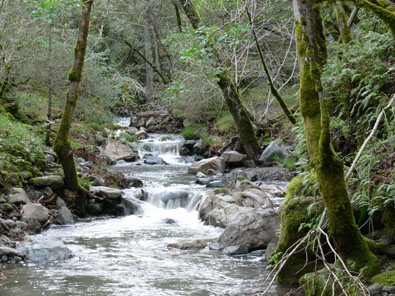
| The Sonoma Creek watershed includes 465 miles of creeks and streams, flowing southeast through the Sonoma Valley from headwaters in the Sugarloaf Range to San Pablo Bay. Rainfall ranges from about 23 inches per year in the valley to more than 50 inches in the Sonoma Mountains to the West and the Mayacamas mountains to the east. Approximately 30 percent of the watershed is forest; agriculture (mainly vineyards) account for another 30 percent, and 20 percent is grassland and rangeland. Only 15 percent of the watershed is developed. The watershed provides habitat for several native threatened or endangered species of concern, including steelhead trout (Oncorhynchus mykiss), Chinook salmon (Oncorhynchus tshawytscha), and California freshwater shrimp (Syncaris pacifica). The pathogens TMDL identifies actions that, once implemented, should also reduce sediment pollution and contribute to the restoration and support of the fishery. |
 |
Significant Implementation Actions
On September 14, 2011, the San Francisco Bay Water Board adopted a Conditional Waiver of Waste Discharge Requirements for Grazing Operations in the Napa River and Sonoma Creek Watersheds. This program reduces pathogen and nutrient sources from lands grazed by cattle. We anticipate renewal of the Conditional Waiver in fall 2016.
U.S. EPA provided funding for a San Francisco Bay Water Quality Improvement Fund Project to Sonoma County and City of Sonoma to reduce sediment, pathogen, and pesticide sources in this watershed.
Ongoing implementation actions related to pathogen control include addressing improperly functioning septic systems, reducing sanitary sewer system overflows, and making improvements in pet waste management.
U.S. EPA gives final approval to TMDL for Pathogens in the Sonoma Creek Watershed
On February 29, 2008, the U.S. Environmental Protection Agency approved the Basin Plan amendment adopted by the regional Water Board in June 2006, incorporating a TMDL and implementation plan for pathogens in the Sonoma Creek watershed. The TMDL was approved by the State Office of Administrative Law and became effective on December 7, 2007. The amendment is now part of the Water Control Plan for the San Francisco Bay Basin (Basin Plan), the master planning document for water quality in the Bay Area.
Water Board's adopted Resolution no. R2-2006-0042 (pdf)
Basin Plan Amendment (pdf)
Final Staff Report (pdf, 1.1MB)
Watershed map showing sampling sites and land uses
For more information contact:
Kevin Lunde
Senior Environmental Scientist
San Francisco Bay Regional Water Quality Control Board
1515 Clay Street, Suite 1400
Oakland, CA 94612
Phone: 510-622-2431
Fax: 510-622-2460
E-mail: Klunde@waterboards.ca.gov

