

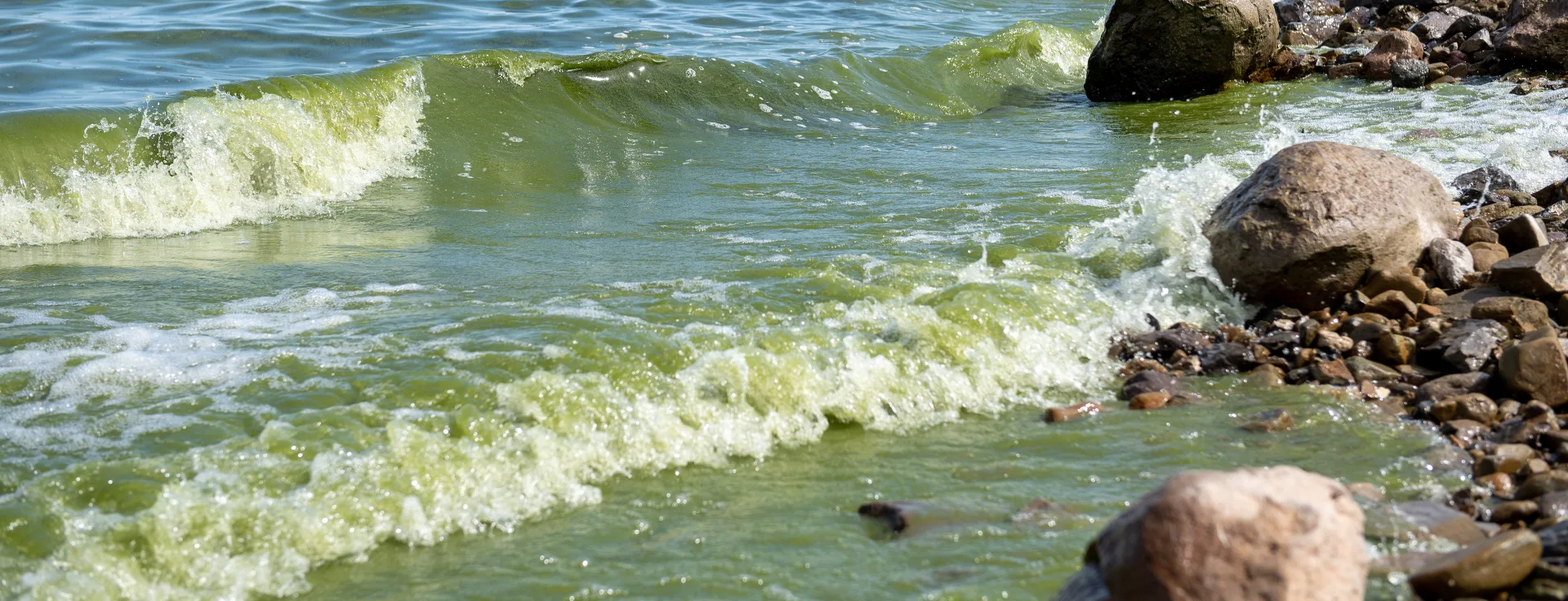
It’s a pleasant afternoon and you can feel the warmth of the sunshine hitting your shoulders. The trail opens to a stretch of water. This is your destination, the spot you’ve always visited in the dog days of summer.
Your pup knows the way, pulling with glee toward the shoreline. Your child is already stepping in, shoes off, laughing.
The water looks… a little green. Not alarming. Just enough to make you wonder.
Is it safe?
In that moment, you have about 10 seconds to decide.
The tricky truth: you can’t tell by sight alone
Harmful algal blooms—or HABs for those of us who talk about them all the time—are caused by certain types of cyanobacteria that can produce toxins harmful to people and animals.
But here’s the part that catches people off guard: you can see a bloom—but you can’t tell if it’s toxic just by looking at it.
“People want a clear visual answer—safe or unsafe,” said Carly Nilson, a senior environmental scientist with the State Water Board’s Freshwater Harmful Algal Bloom (FHAB) Program. “But that’s not something you can determine from appearance alone.”
That’s why the guidance is simple—and consistent: when in doubt, stay out.
Algal blooms can be different colors and textures
Part of the challenge is that HABs don’t always look the same.
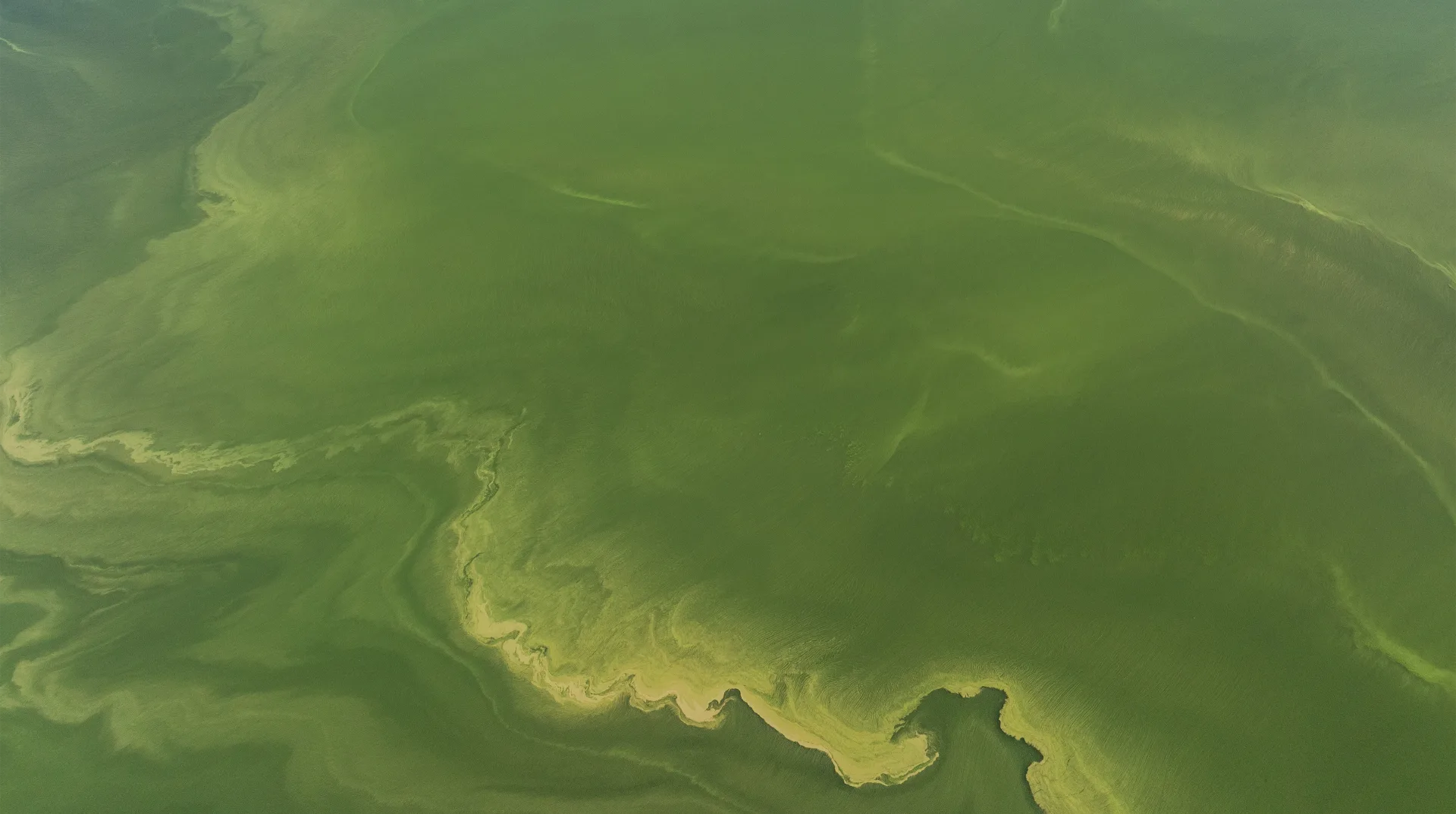
Some blooms float in the water, creating cloudy or paint-like streaks. These are known as planktonic blooms, and they can tint the water green, blue-green, red, or brown.
Others grow attached to rocks or along the bottom before breaking loose and collecting along the shoreline. These are called benthic mats—and they’re especially important to recognize.
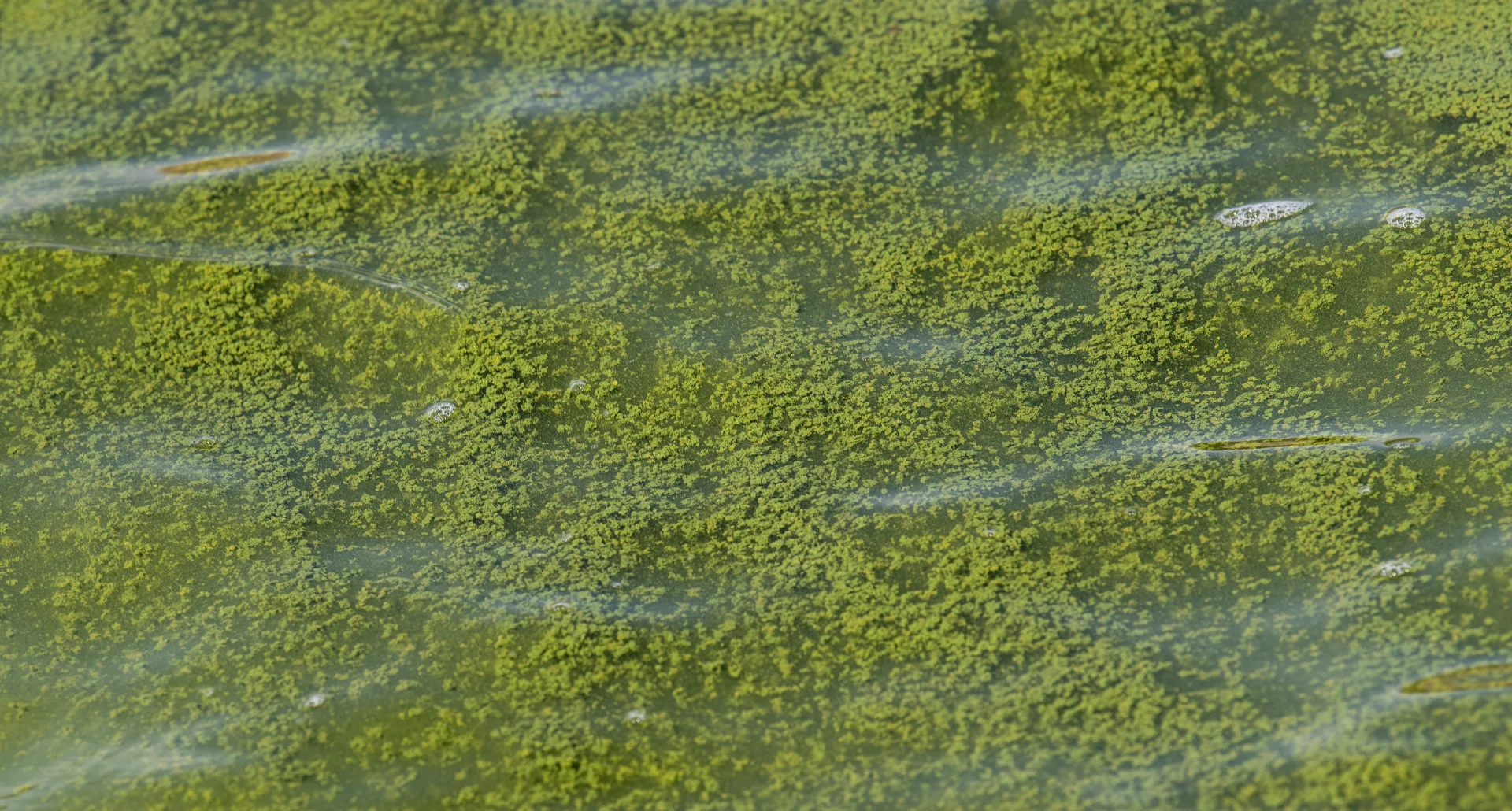
“They can look like thick clumps or mats along the edge of the water,” Nilson said. “That’s often where we see the highest risk for dogs.”
Before you settle in for a day of sun and fun, take stock of some common warning signs:
- Paint-like scum or streaks on the surface.
- Bright or unusual coloration.
- Thick mats or clumps near shore.
- Murky or cloudy water.
Harmless algae, by contrast, often appears stringy, attached to surfaces, and more like underwater vegetation than floating material.
Even with those clues, you can spot a potential bloom—but you can’t confirm it’s safe.
Why dogs are at greatest risk
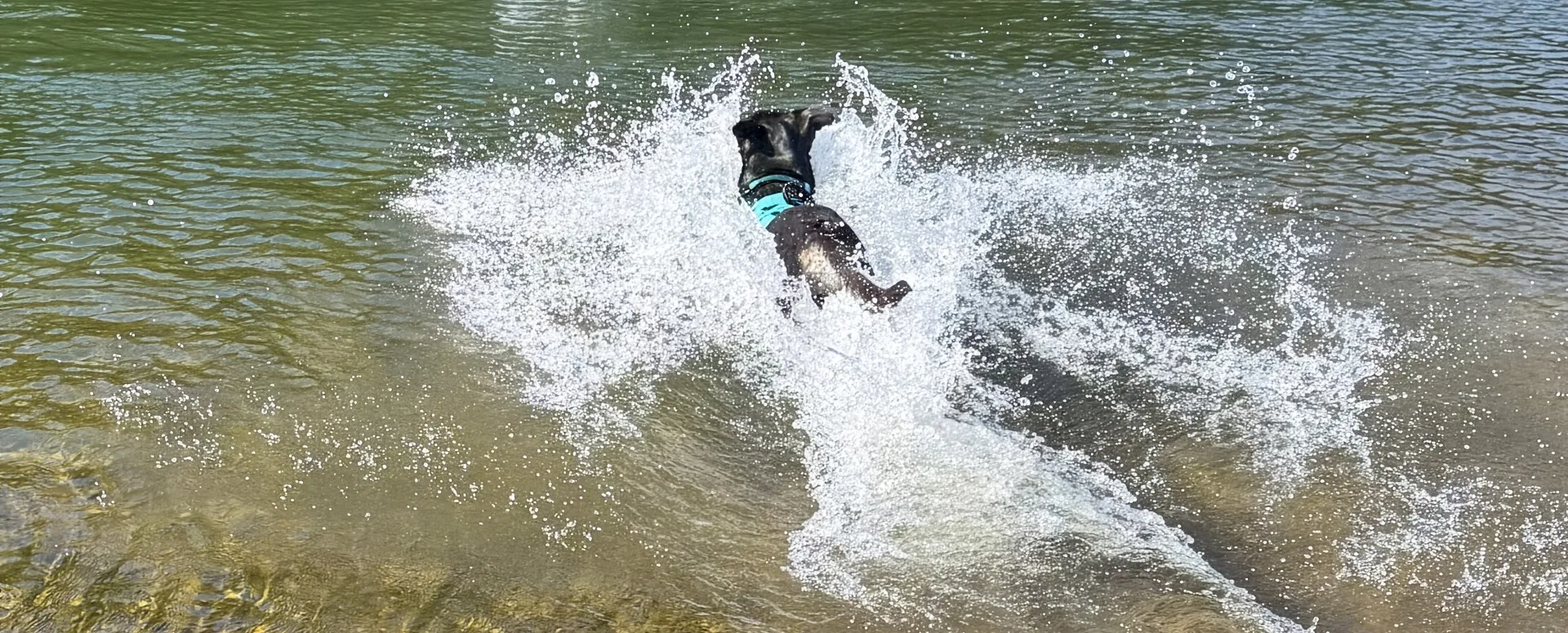
For dogs, the danger isn’t just being in the water—it’s what they do next.
They drink. They lick their fur. To your dismay, they eat gross stuff. With benthic mats, they may eat the algae directly.

“Most of the serious dog exposures we see aren’t from swimming. It’s from ingesting material along the shoreline.”
— Carly Nilson, senior environmental scientist, State Water Board Freshwater Harmful Algal Bloom Program
As a dog owner herself, that risk isn’t abstract.
“You think about how quickly it can happen,” she said. “Dogs are curious. They don’t know what they’re getting into. That’s why awareness is so important.”
Symptoms can appear within minutes to hours and may include:
- Vomiting or diarrhea
- Lethargy
- Difficulty walking
- Seizures
If the water looks off—or there are mats along the shore—keep pets out.
Don’t rely on your phone to make the call
Many people use their phones to identify plants on the trail. HABs don’t work that way.
Apps can help identify plants—but they can’t tell you if a bloom is toxic. When it comes to water safety, don’t rely on your phone to make the call.
Instead, use your phone to:
- Check current conditions.
- Look for advisories.
- Report what you’re seeing.
How California responds to blooms
Unlike some water quality programs, California doesn’t rely on routine statewide monitoring for HABs. Instead, the system starts with something simple: someone notices something and reports it.
The FHAB Program relies heavily on reports submitted through the state’s online HABs portal. From there:
- Staff may follow up with the reporting party.
- Local agencies and waterbody managers are notified.
- Sampling and monitoring are coordinated.
- Advisories and warning signs are issued as needed.
“That first report is often what gets everything moving,” Nilson said. “It’s a really important part of how we protect people.”
The people behind the warnings
Behind every advisory is a team working to interpret conditions that aren’t always obvious—and to translate that into clear guidance the public can act on.
The FHAB Program focuses on two goals:
- Protecting public health.
- Advancing science to better understand HABs in California.
That work can mean anything from reviewing bloom reports to coordinating with counties to helping ensure warning signs go up before a busy holiday weekend.
It’s not always visible—but it’s constant.
Before you head to the water
Planning a trip to the water this weekend? Take a moment to:
- Check current conditions on California’s HABs map.
- Look for posted advisories.
- Report suspicious blooms.
Visit the Water Quality Monitoring Council website for updates and resources.
A final thought
Most days on the water are exactly what they should be—relaxing, refreshing, and safe.
But when something looks off, trust that instinct.
Because sometimes, the most important decision you make all day happens in about 10 seconds.