
With nearly 40 million residents, farms that produce half of all U.S. produce and an increasingly volatile climate, California’s prosperity as the world’s fourth largest economy is directly linked to its ability to stretch its water supplies.
Rarely do you have to go back too far to find drought in California. Over the last 15 years alone, Californians have lived through some of the hottest and driest stretches on record, including two statewide emergency drought declarations (2012–16, 2021–22).
And right now, drought conditions that have persisted for more than 20 years are worsening in the Colorado River Basin, threatening the source of approximately 25% of Southern California’s drinking water supply.
Droughts can deplete drinking water supplies, cause crop failures, harm aquatic ecosystems, limit hydroelectric power generation, and increase wildfire activity. They also come with severe economic repercussions: In 2022, drought conditions caused an estimated loss of $1.7 billion in revenue for California’s agricultural industry.
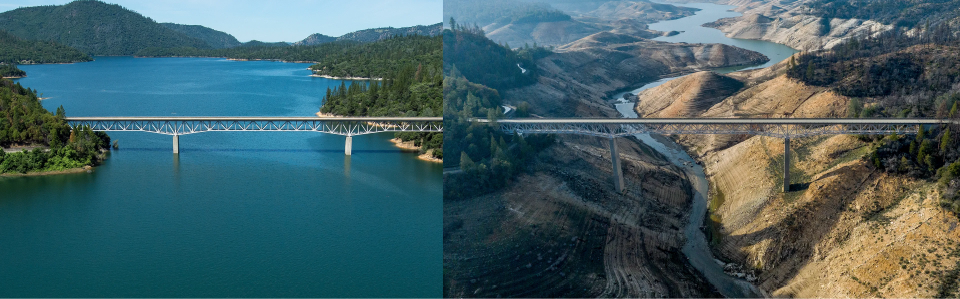
Though they have always been a natural and recurring feature of California’s climate, droughts now happen more frequently and last longer because of climate change. Over the next 20 years, experts predict California could lose up to 10% of its water supply due to a hotter, drier climate, making conservation more vital than ever.
In a testament to their resolve, Californians have continually withstood drought by banding together to decrease water use and by learning to thrive with less. But with climate change increasing the pace and severity of extreme weather, the Legislature decided in 2018, after the punishing 2012–16 drought, that the state could no longer rely on this resolve alone and wait until the next drought arrived to act.
Californians answered the call
After an April 2015 Sierra Nevada snow survey came up dry, Californians were asked to make unprecedented emergency water cutbacks. In typical fashion, they embraced the moment.
In June through October 2015, statewide water conservation was 27% compared to 2013 water use levels, exceeding the state’s 25% target. Overall, Californians saved enough water to nearly fill Folsom Lake, outside Sacramento.
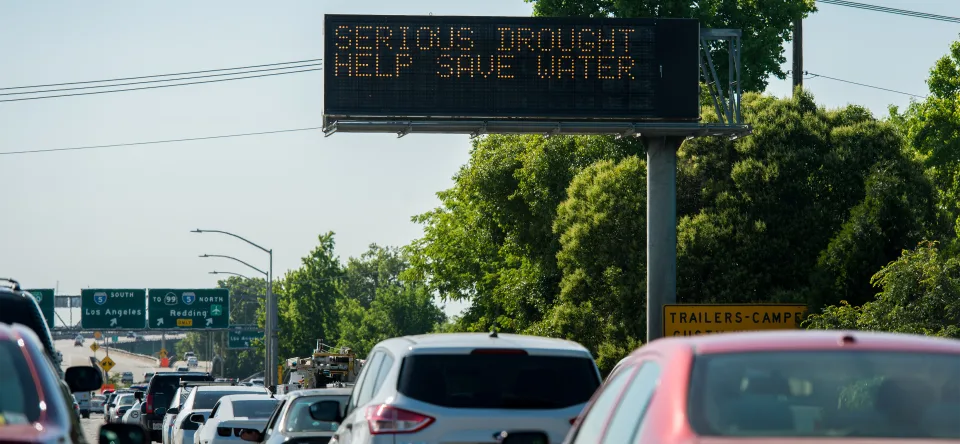
“We learned during that bitter drought that efficiency pays dividends, and to Californians’ credit, they have remained deliberate at the tap even during wet years,” said James Nachbaur, director of the board’s Office of Research, Planning and Performance.
Water saving habits utilized during the 2012–16 drought have undoubtedly carried over; collectively, suppliers are reporting about 17% less water use per person compared to 2013 levels.
Setting water efficiency standards
With the hardships and severity of the 2012–16 drought a recent memory, the Legislature in 2018 adopted the Making Conservation a California Way of Life framework to establish long-term practices to help water suppliers and communities adapt to water challenges on an ongoing basis.
In 2024, the State Water Board adopted a nation-leading regulation to implement the framework and to reinforce the state’s already strong conservation ethic by promoting more efficient water use by large water utilities across California.
The regulation, which applies to water suppliers and not to individual households or businesses, establishes long-term standards for efficient water use and may ease or delay emergency water saving measures during drought. In 2025, suppliers began submitting progress reports to the board and in 2027 they will need to start complying with their individualized water use objectives, or budgets.
“The regulation is a new way to manage water use in California communities, and we’re encouraged that water suppliers have been diligently reporting their data,” said Karina Herrera, who manages the board’s conservation unit. “The majority of suppliers are already meeting their budgets and are on the right track to continue meeting them as the standards become more efficient over time.”
See how your water system is progressing toward its conservation goals with the board’s new transparency tool.
One supplier’s tools to help customers save water

“Giving our customers the tools and information to use water efficiently has made a significant impact in keeping our water usage efficient even during non-drought periods.”
— Joone Lopez, General Manager, Moulton Niguel Water District
Even in the absence of a regulation directing them to do so, creating and maintaining a water use efficiency mindset is a priority for most water suppliers, which are always looking ahead and planning for droughts and other emergencies.
Located in south Orange County, Moulton Niguel Water District is one such supplier. The district has been able to build trust with its 170,000 customers by offering home savings surveys, personalized water budgets, landscaping and irrigation workshops and a variety of rebate programs. In partnership with its customers, the district is saving more than 300 million gallons annually, conserving water for the lean years.
“People, trust and tools are essential to helping customers be efficient,” said Joone Lopez, the district’s general manager. “Giving our customers the tools and information to use water efficiently has made a significant impact in keeping our water usage efficient even during non-drought periods.”
Reshaping urban water use
Continuing a trajectory that started decades ago and is now reinforced by regulatory and supplier incentives, Californians are drastically changing how they use water inside and outside of their homes.
Residents and businesses are swapping thirsty lawns with native gardens, upgrading to modern appliances, installing efficient sprinkler systems and fixing their leaks. These changes are paying off in a major way: Today, Los Angeles residents use about 15% less water compared to 1970, while 200 miles north in the city of Fresno, residents use the same amount of water as they did in 1990 despite a 32% population increase.
Lawn replacement campaigns have spurred landscape transformation, specifically in Southern California, where up to 70% of urban water use goes to outdoor irrigation. Over the last 15 years, the Metropolitan Water District of Southern California’s rebate program has spurred the removal of more than 230 million square feet of grass, saving enough water to meet the needs of more than 83,000 homes per year.
“California has been taking water conservation seriously since at least the 1970s,” Herrera said. “Since then, more and more water suppliers and residents have made water efficiency a central focus and have institutionalized conservation in California.”
Investing in water recycling
Another way the board is helping communities drought-proof their water supplies is by funding recycled water projects.
Water recycling is a major facet of California’s water supply strategy: Since 2000, the annual volume of recycled water produced in the state has increased by roughly 50% to a high of 750,000 acre-feet in 2022.
Most commonly, California communities use recycled water for purposes other than drinking water, like irrigation, industrial and commercial uses. By treating and reusing wastewater on golf courses, parks and other landscapes, communities can stretch every drop of their drinking water supplies.
Since 2019, the board has distributed over $2 billion for water reuse projects, including a new project in Santa Barbara County that will help replenish local groundwater supplies.
Enough water for up to 9 million households a year can still be saved
California has made remarkable improvements but there is still lots to do. Climate change, the continuing severe drought on the Colorado River and other pressures mean more progress is needed.
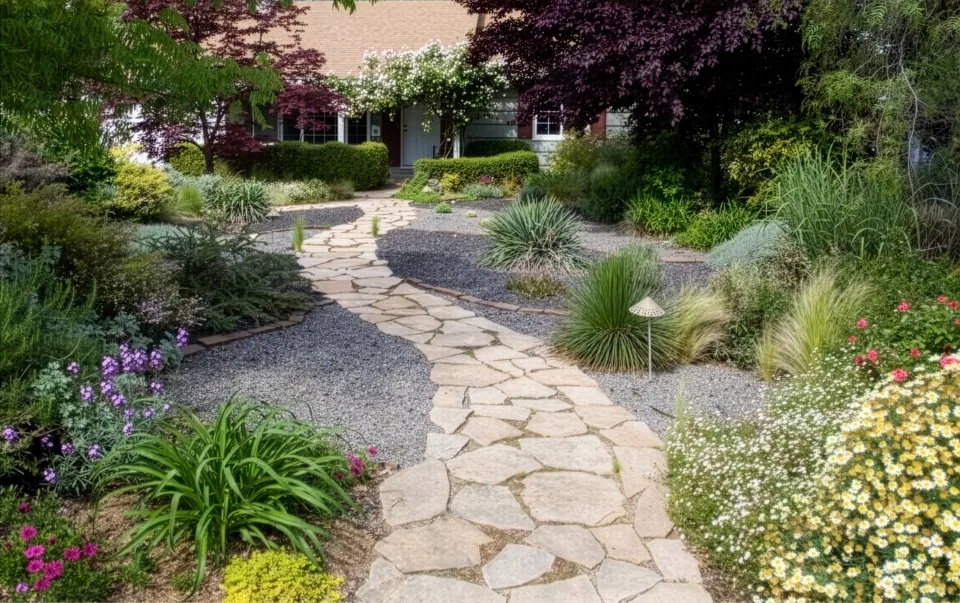
According to the Pacific Institute, California could save an additional 1.5 million acre-feet — enough to supply up to 4.5 million households annually — just by converting lawns. Potential savings from lawn conversions are highest near major population centers on the South Coast and the San Francisco Bay regions. Inside homes and businesses, up to another 1.5 million acre-feet could be saved by replacing inefficient appliances and fixing leaks.
The water saved over the decades has allowed California to endure more frequent and intense droughts without the kinds of water shortages that once seemed inevitable. With continued commitment from residents and businesses to stretch California’s most precious natural resource, the foundation is in place for a stronger, more resilient water future.
“We are proud of the passion our customers have for protecting this critical resource, but there is always more that can be done to reduce water use,” Lopez said.