
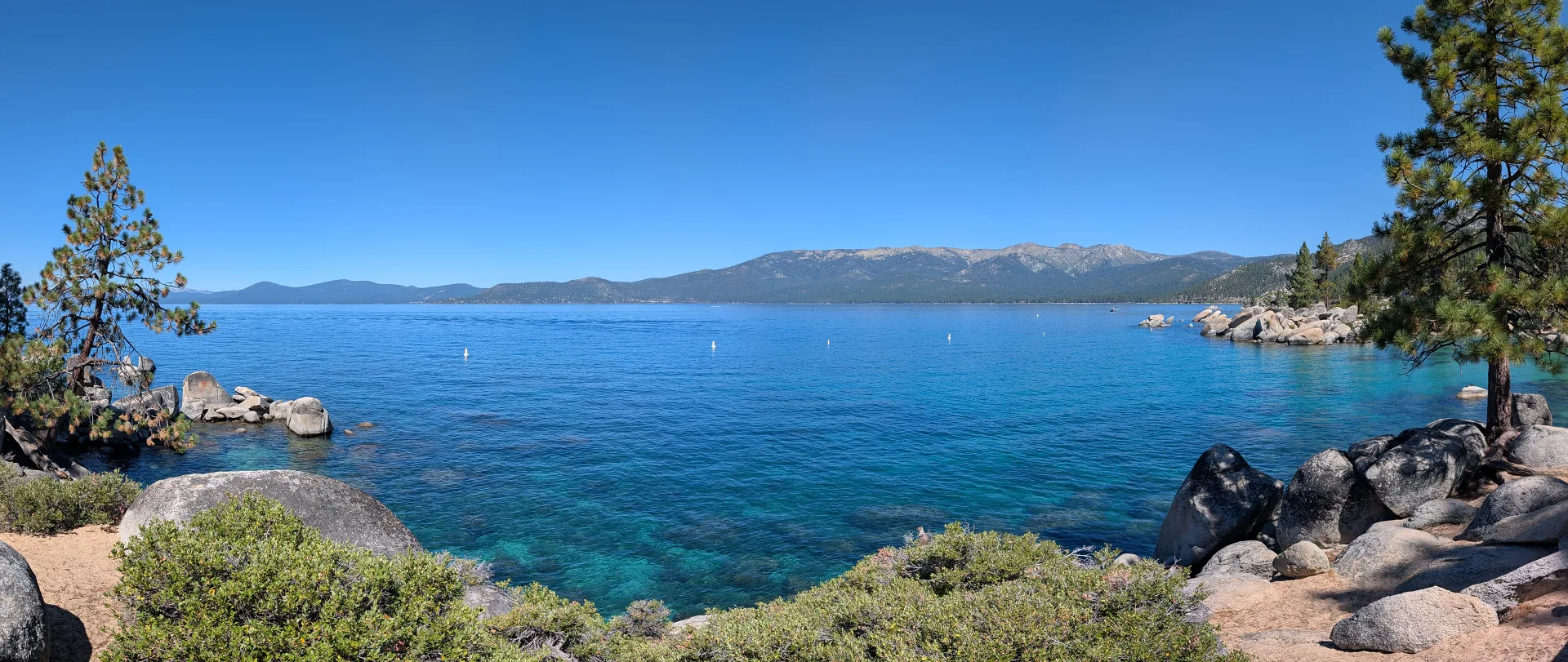
Lake Tahoe, one of California’s – and the world’s – most dazzling natural features, attracts approximately 15 million visitors every year to its emerald waters, sandy beaches and stunning alpine terrain. Often referred to as the “Jewel of the Sierra,” the lake is not just a tourism hotspot but also a unique water resource and major freshwater research hub, with Lahontan Regional Water Quality Control Board scientists playing a key role in preserving the lake’s iconic water clarity and quality.
Tahoe’s clarity is one of many reasons that make it iconic, but it’s also fragile.
As the lake’s popularity has increased, its waters have become murkier. Clarity declined from a depth of 105 feet in 1967 to an all-time low at the time of only 64 feet in 1997, spurring concern in California and Nevada.
Over the following decade, federal, state and local agencies and a host of private organizations partnered to understand why the lake was becoming less clear and to develop a workable solution to ensure that future generations could enjoy its beauty. Researchers pinpointed the core threat to clarity: tiny particles from roads, urban runoff and erosion that stay suspended and cloud the water.
Tahoe goes on a diet
After much cooperation, California and Nevada in 2010 adopted a comprehensive plan to stop the decline and restore the lake’s clarity to historic levels. The plan gave the Lahontan Water Board a leading role in developing and managing a sorely needed anti-pollution “diet” for the lake.
The prescribed solution involved reducing the lake’s intake of fine sediments and the nutrients nitrogen and phosphorus, which diminish clarity by reflecting sunlight and promoting algae growth. The sediment diet, known officially as the Lake Tahoe Total Maximum Daily Load (TMDL) Program, sets a long-term goal of improving clarity so that people may once again see to depths of nearly 100 feet.
Each year, the regional board and the Nevada Division of Environmental Protection set sediment goals for the program’s partners, state agencies and local governments in the Lake Tahoe Basin and award them “clarity credits” for keeping pollutants out of the lake. The Lahontan and state water boards permit many of these projects and sometimes fund them, including a recently completed multi-benefit South Lake Tahoe stormwater project that will protect the lake’s clarity while reducing local flood risk and increasing recreational opportunities.
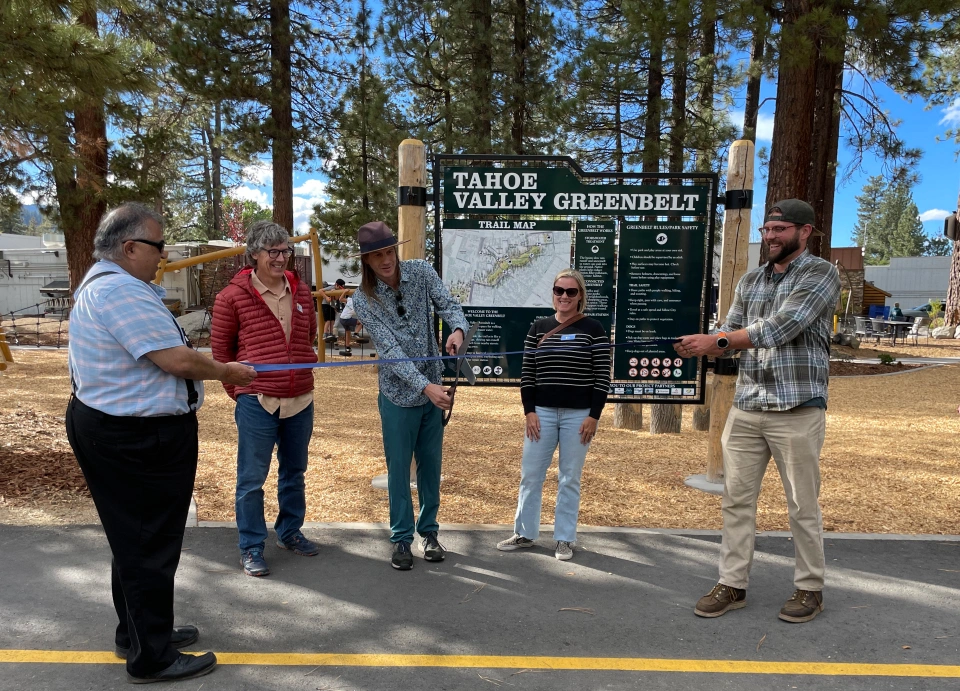
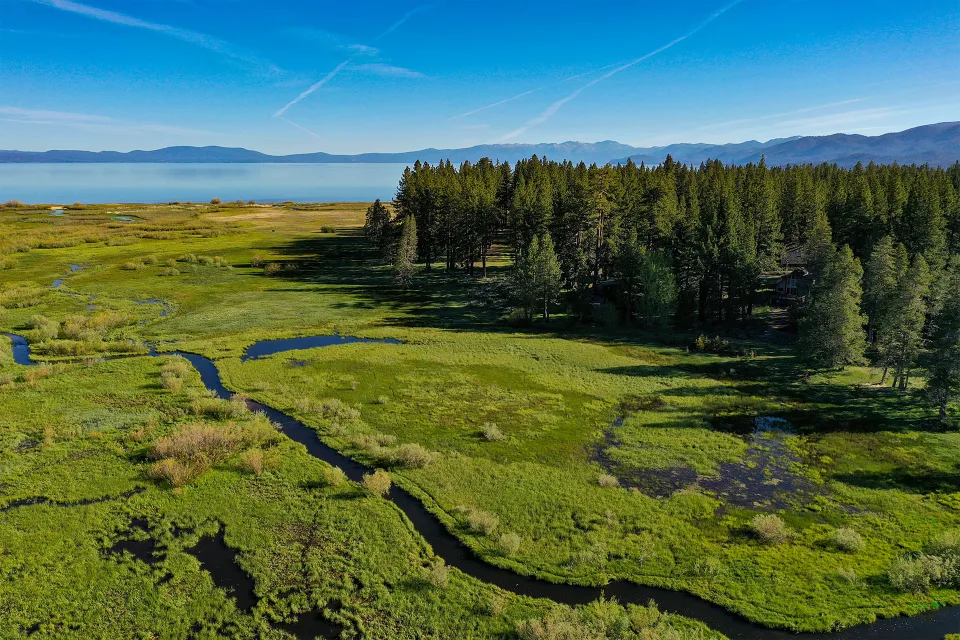
By restoring wetlands and streams, limiting dust from roads and construction sites and improving stormwater systems, program partners kept an estimated 736,600 pounds of sediment out of the lake in 2025, a record amount since the program began tracking the statistic in 2015.
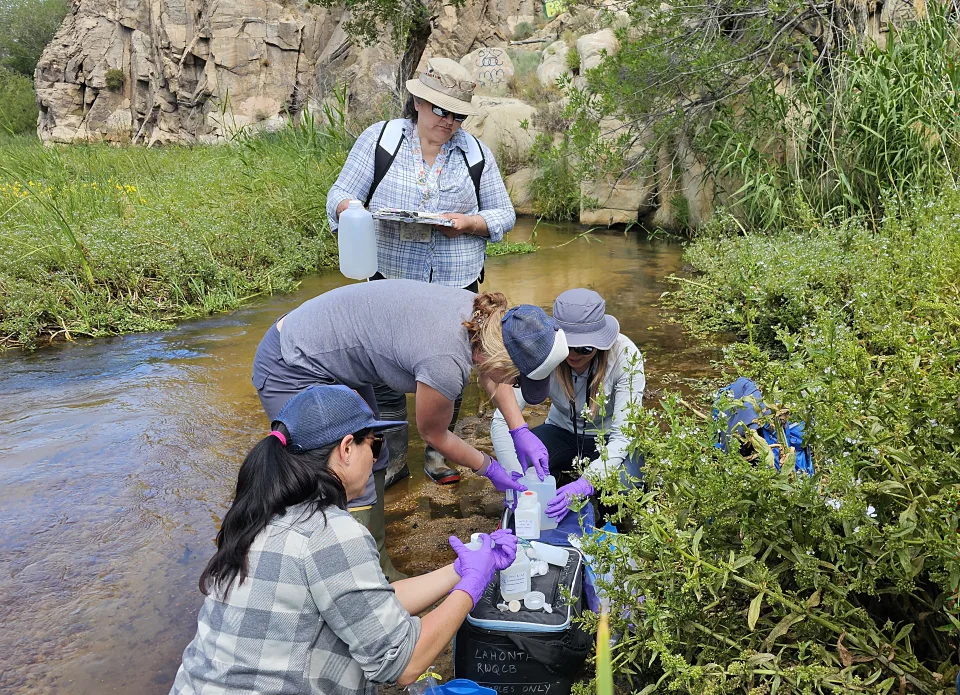
In any given week, board staff are in the field checking water quality, monitoring erosion control projects, collaborating with state and local agencies and collecting data to track the program’s progress.
“From Lake Tahoe’s clear blue deep water, its beaches, wetlands and tributaries, our staff are actively working to protect and preserve its famed water quality for future generations,” said Ben Letton, the regional board’s executive officer who helps manage the TMDL program.
Still work left to do
Lake Tahoe’s annual average clarity has stabilized with the help of the TMDL program, but with growing impacts from wildfire and a rapidly changing climate, the regional board and its partners continue to refine their approach.

“Protecting Tahoe requires a multi-layered approach. As climate challenges grow, we remain firmly committed to restoring the lake’s clarity and working with our partners to strengthen its resilience.”
— Ben Letton, Executive Officer, Lahontan Water Board
Multiple efforts are underway to better understand the watershed’s evolving dynamics and improve the TMDL program. Researchers are studying how wildfires, plankton and invasive species – drivers of clarity that were not fully foreseen when the TMDL program was created – are contributing to the lake’s ongoing clarity trend. California and Nevada are also working with the Tahoe Science Advisory Council to better understand additional influences on clarity.
“We are advancing the science behind the TMDL program to better understand these pressures and will adapt the program as needed to protect the lake’s long-term health,” Letton said.
Protection is about more than clarity
As one of only two lakes (alongside Mono Lake) that California has designated as Outstanding National Resource Waters, Tahoe receives the highest level of protection available under the federal Clean Water Act.
For the regional board, protecting the lake means managing the TMDL program, tracking water quality at popular beaches, permitting and monitoring marsh restoration and construction projects, funding research programs and responding to wastewater spills and other emergencies.
“Protecting Tahoe requires a multi-layered approach,” Letton said. “As climate challenges grow, we remain firmly committed to restoring the lake’s clarity and working with our partners to strengthen its resilience.”