

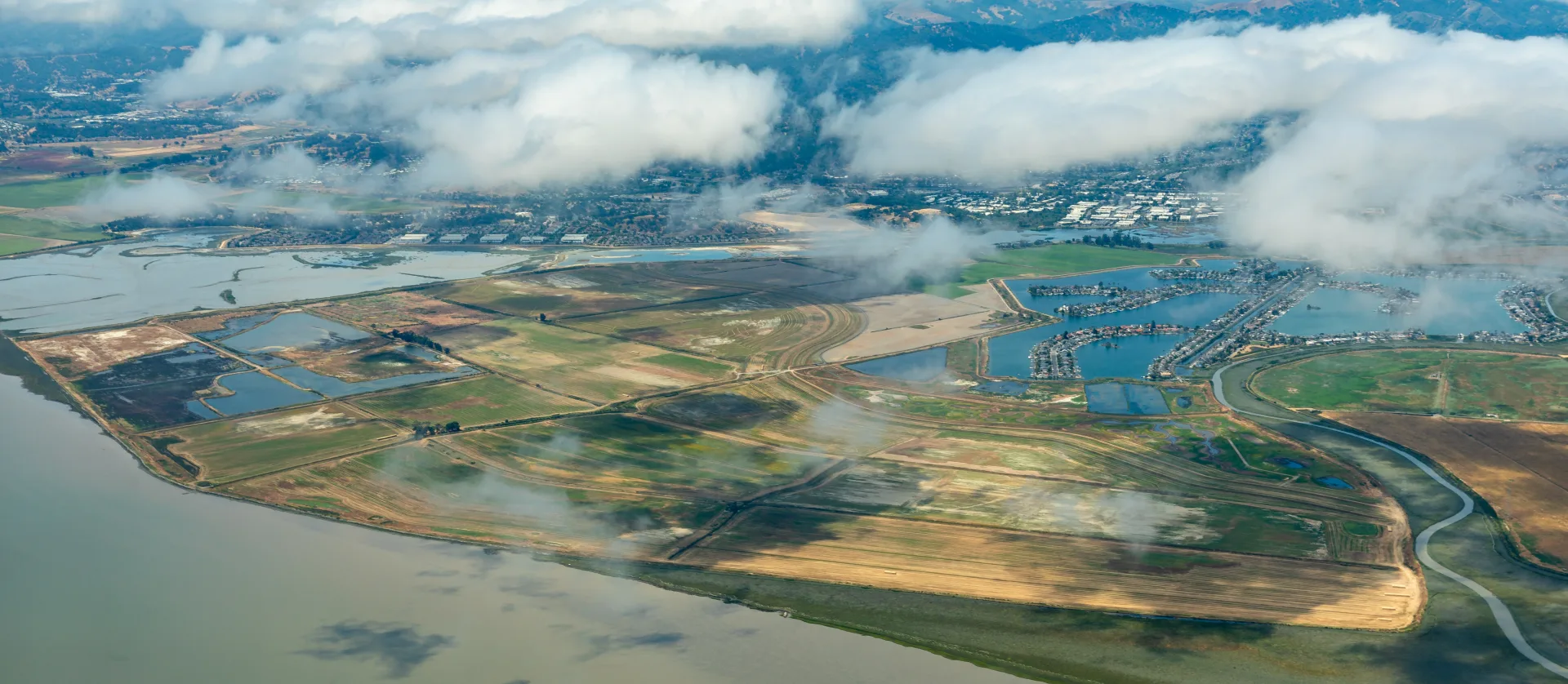
From Humboldt Bay south to San Diego Bay, California is home to about 1.3 million acres of bays and estuaries, including three of national significance: Morro Bay, Santa Monica Bay and the San Francisco Bay/Sacramento-San Joaquin Delta.
Often referred to as “nurseries of the sea,” estuaries provide nutrient-rich habitat for native plants and animals. They are also vital to California’s economy, protecting the quality of water needed for drinking, agriculture and commercial and recreational fishing.
Managing estuary health requires a delicate balance. The California Water Boards help protect estuaries by:
- Setting limits on contaminants such as bacteria or metals.
- Reducing stormwater and wastewater pollution.
- Defining how much water may be diverted from waterways.
- Funding habitat restoration projects.
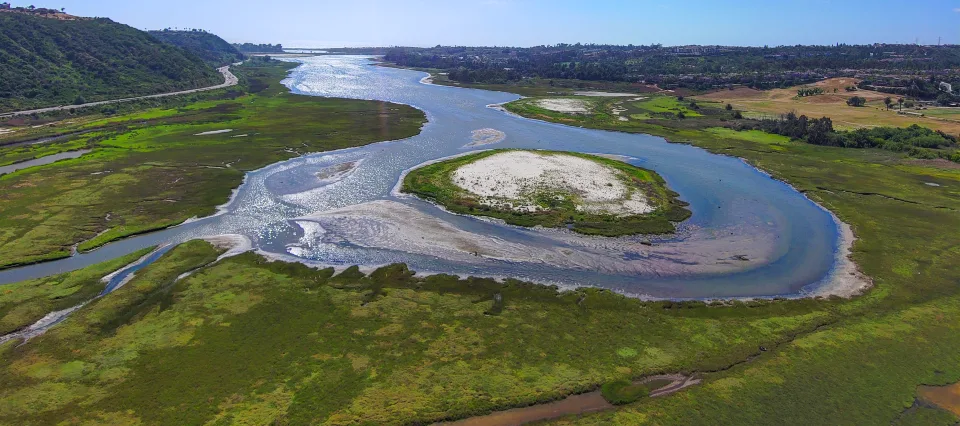
“Estuaries are ecological hotspots that provide habitat for wildlife, act as natural filters that trap pollutants and help prevent saltwater intrusion,” said Nick Martorano, assistant deputy director for the State Water Resources Control Board’s Division of Water Quality. “Protecting estuaries strengthens watershed resilience, supports public health and ensures a more reliable and sustainable supply of fish, shellfish and clean drinking water.”
A secret weapon in fighting and adapting to climate change
Estuaries are partially enclosed bodies of water where freshwater from rivers mixes with salt water from the ocean. This “brackish,” or slightly salty water, supports a wide variety of plant and animal species, making estuaries some of earth’s most biologically productive environments.
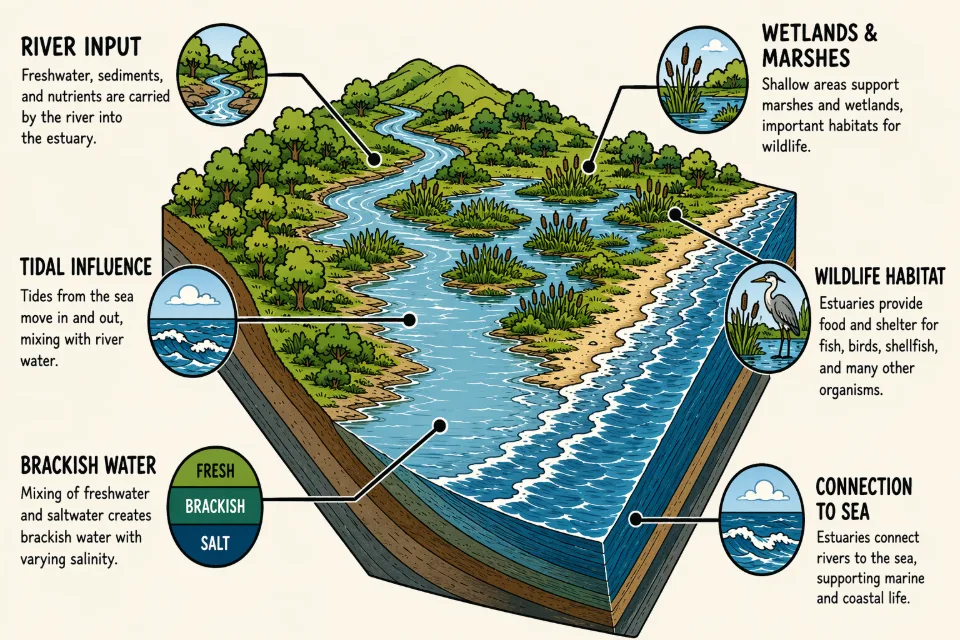
Text version of this graphic
- River input: Freshwater, sediment, and nutrients are carried by rivers into the estuary.
- Tidal influence: Tides from the sea move in and out, mixing with river water.
- Brackish water: Mixing of fresh and salt water creates brackish water with varying salinity.
- Wetlands and marshes: Shallow areas support marshes and wetlands, important habitats for wildlife.
- Wildlife habitat: Estuaries provide food and shelter for fish, birds, shellfish, and more.
- Connection to the sea: Estuaries connect rivers to the sea, supporting marine and coastal life.
Bays and estuaries
- Provide refuge to numerous native species, including migrating salmon and steelhead trout.
- Shield communities from flooding during major storms and rising sea levels.
- Fight climate change by trapping massive amounts of carbon in plants and soils.
Given their coastal location and beauty, estuaries have always been favored areas for population centers, commerce and recreation. But because of their immense value, estuaries across the globe have been exploited and developed. Researchers estimate that the West Coast has lost an estimated 85% of its original estuarine wetlands, making it critical for California to preserve its remaining estuaries and the benefits they provide to the environment and coastal communities.
Protecting estuaries through two important tools
The California Water Boards use two key regulatory tools to protect estuaries: water quality control plans and water right permits.
Water Quality Control Plans identify legally designated “beneficial” uses of water, including uses for drinking water, agriculture, and estuary habitat, that must be protected in a specific waterway. To protect those uses and overall water quality, the plans set maximum or minimum levels for certain constituents in water—in an estuary, levels for dissolved oxygen, salinity and bacteria are of particular importance.
Water rights permits are another key tool, ensuring that estuaries don’t become too salty.
In an estuary, seawater moves upstream when freshwater inflows decrease, a process known as saltwater intrusion. This process can harm aquatic species and foul drinking water supplies, particularly during dry years. Water right permits can protect freshwater flows by limiting the amount of water taken from the rivers and streams that feed estuaries.
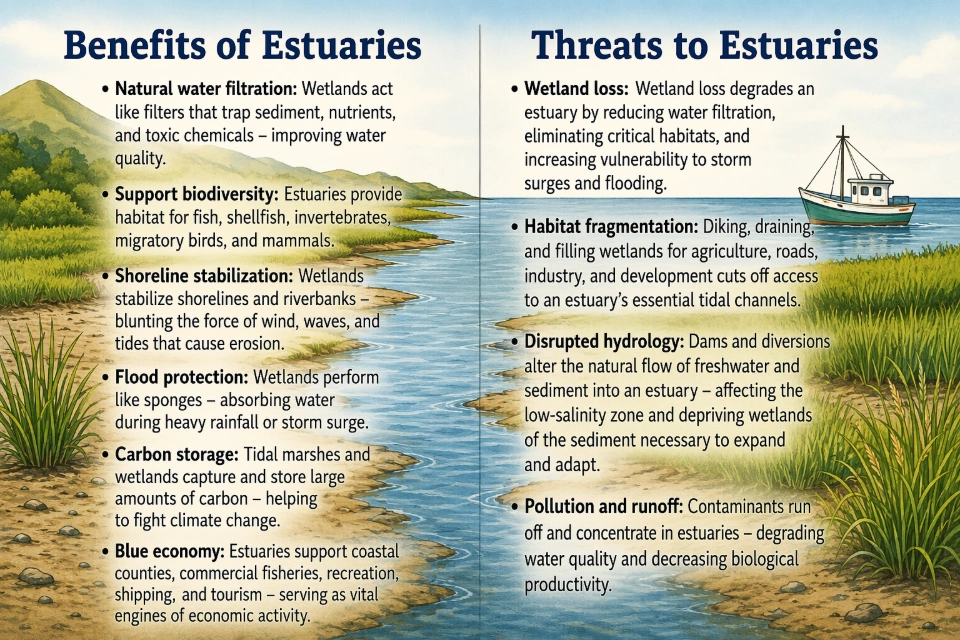
Text version of this graphic
Benefits of estuaries
- Natural water filtration: Wetlands act like filters that trap sediment, nutrients, and toxic chemicals – improving water quality.
- Support biodiversity: Estuaries provide habitat for fish, shellfish, invertebrates, migratory birds, and mammals.
- Shoreline stabilization: Wetlands stabilize shorelines and riverbanks – blunting the force of wind, waves, and tides that cause erosion.
- Flood protection: Wetlands perform like sponges – absorbing water during heavy rainfall or storm surge.
- Carbon storage: Tidal marshes and wetlands capture and store large amounts of carbon – helping to fight climate change.
- Blue economy: Estuaries support coastal counties, commercial fisheries, recreation, shipping, and tourism – serving as vital engines of economic activity.
Threats to estuaries
- Wetland loss: Wetland loss degrades an estuary by reducing water filtration, eliminating critical habitats, and increasing vulnerability to storm surges and flooding.
- Habitat fragmentation: Diking, draining, and filling wetlands for agriculture, roads, industry, and development cuts off access to an estuary’s essential tidal channels.
- Disrupted hydrology: Dams and diversions alter the natural flow of freshwater and sediment into an estuary – affecting the low-salinity zone and depriving wetlands of the sediment necessary to expand and adapt.
- Pollution and runoff: Contaminants run off and concentrate in estuaries – degrading water quality and decreasing biological productivity.
In addition to regulations and permits, the State Water Board funds estuary protection and restoration projects through the Clean Water State Revolving Fund, Nonpoint Source Pollution Control Program and Storm Water Grant Program.