Surface Water Ambient Monitoring Program (SWAMP)
Program Description
SWAMP is a statewide monitoring effort designed to assess the conditions of surface waters throughout the State of California. The SWAMP program was first established in year 2000 by the State Water Resources Control Board (SWRCB).
For the purposes of SWAMP, “ambient” monitoring refers to any activity in which information about the status of the physical, chemical, and/or biological characteristics of the environment is collected to answer specific questions about the status and trends in water quality and/or beneficial uses of water.
The primary objectives of surface water monitoring at the Lahontan Region are:
-
to determine (to the extent to which funding is available) whether ambient water quality at selected sites is in compliance with the chemical and physical water quality objectives contained in the Water Quality Control Plan for the Lahontan Region (Basin Plan) and the “California Toxics Rule.”
-
to determine (to the extent to which funding is available) whether water flowing from California into the State of Nevada meets Nevada’s water quality objectives.
-
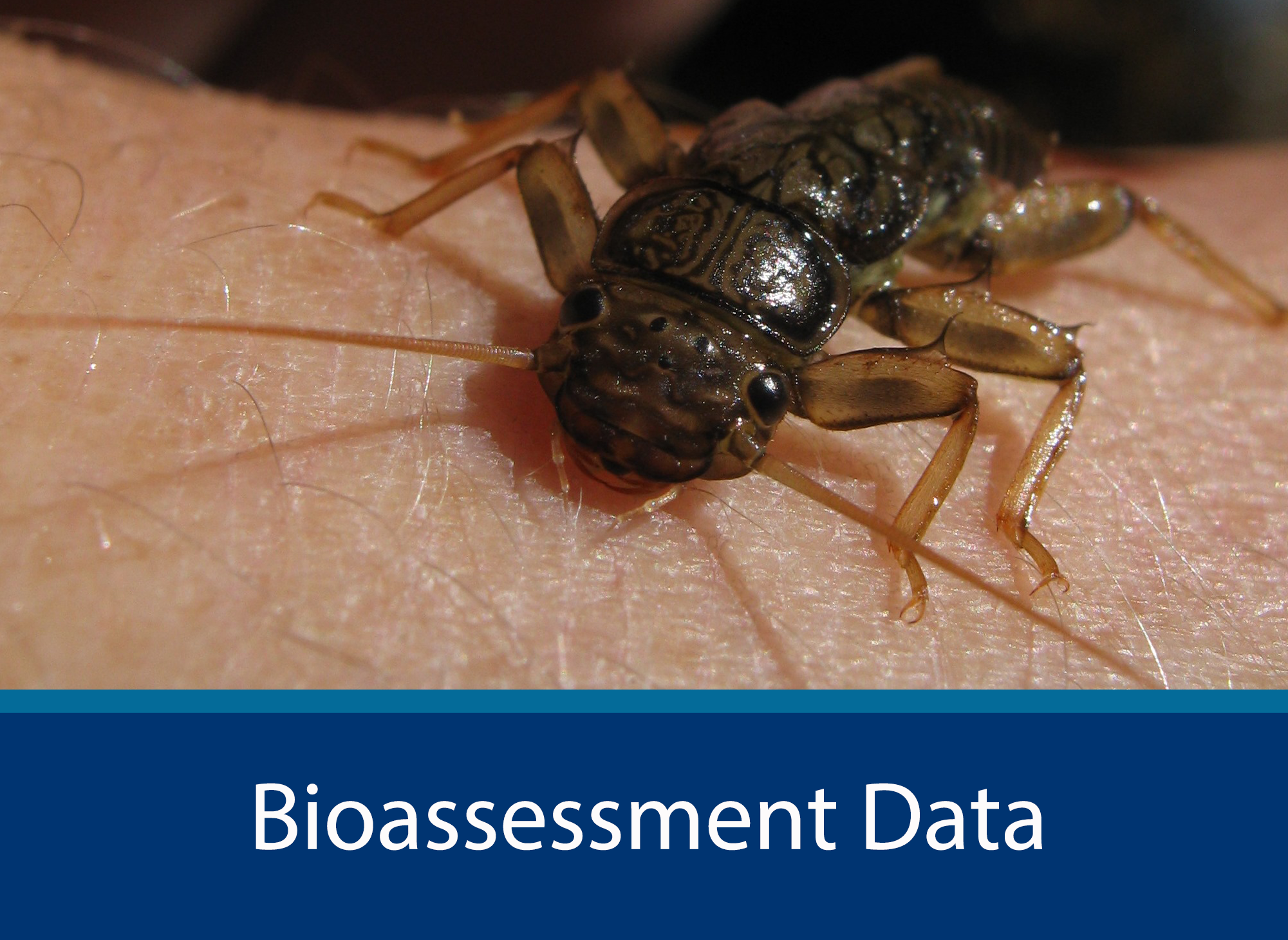
to develop and implement (to the extent to which funding is available) tools to assess the biological integrity of the Region's streams and rivers based on instream benthic macroinvertebrate and periphyton assemblages.
Staff contact info and currently available reports, protocols, and data are summarized below. For more info, see also the SWRCB’s SWAMP website.
Contact Info for SWAMP staff at the Lahontan Region
-
Tom Suk
Regional Monitoring Coordinator, Lahontan RWQCB
tsuk@waterboards.ca.gov
(530) 542-5419 -
Kelly Huck
Requests for Data, Reports, Etc.
khuck@waterboards.ca.gov
(530) 542-5458
Available
[ Reports ] [ Data ] [ Protocols for Bioassessment & Habitat Assessment ]
[ Reports ] [ Data ] [ Protocols for Bioassessment & Habitat Assessment ]
Reports
- Comparison of the Performance of Different Bioassessment Methods: similar evaluations of biotic integrity from separate programs and procedures, by David B. Herbst and Erik L. Silldorff, June 2006
- Performance of Different Bioassessment Methods from California: Side by Side Comparisons of Field, Laboratory and Analysis Procedures for Streams of the Eastern Sierra Nevada, by David B. Herbst and Erik L. Silldorff, November 2004
- Macroinvertebrate Monitoring for the Bagley Valley Watershed Restoration Project on the Humboldt-Toiyabe National Forest: Final Report, by David B. Herbst and Jeffrey M. Kane, September 2004
- Responses of Stream Channels, Riparian Habitat, and Aquatic Invertebrate Community Structure to Varied Livestock Grazing Exposure and Management in the West Walker River Watershed (Mono County, California), by David B. Herbst and Jeffrey M. Kane, May 2004.
- Use of Diatoms and Soft Algae as Indicators of Stream Abiotic Determinants in the Lahontan Basin, by Dean W. Blinn and David B. Herbst, December 2003
- Development of Biological Water Quality Targets for Assessment of Total Maximum Daily Load (TMDL) of Sediment in the Squaw Creek Watershed (Placer County, California), by David B. Herbst, April 2002
- Investigation of Near Shore Turbidity at Lake Tahoe, by Kendrick Taylor, March 2002
- Biomonitoring on the Upper Truckee River Using Aquatic Macroinvertebrates: Watershed Restoration Baseline Data for 1998-2000, by David B. Herbst, December 2001
Data
- Data generated by the SWAMP program are posted on the Internet on an ongoing basis, as soon as quality assurance checks are completed. To access available SWAMP data on-line, follow the instructions at: http://mpsl.mlml.calstate.edu/SWdata.htm.
- Note: Only “raw” data are available at the website listed above. More detailed assessments of the Lahontan Region’s SWAMP data for years 2000-2005 are available as described below. If you have questions, you may contact Water Board staff.
- SWAMP Summary Report, 2000-2005. Lahontan Water Board SWAMP staff has prepared an assessment report for years 2000-2005. The report summarizes comparisons of SWAMP results to regulatory criteria contained in the Lahontan Basin Plan, California Toxics Rule, California Primary MCLs and California Secondary MCLs. Note: This report assesses and summarizes the results, but does not contain the actual data.
- SWAMP results for years 2000-2005, by Hydrologic Unit. Below are links to spreadsheet workbooks for each water body where sampling was conducted by the SWAMP program within the Lahontan Region from 2000-2005. The workbooks provide raw data as well as comparisons of the results to numerous regulatory and non-regulatory (i.e., advisory) criteria, including criteria contained in the Lahontan Basin Plan, California Toxics Rule, California Primary MCLs, California Secondary MCLs, California Public Health Goals, USEPA primary MCLs, USEPA secondary MCLs, USEPA (IRIS) Reference Dose (for Drinking Water), USEPA Health Advisory, USEPA National Ambient Water Quality Criteria, California DHS Action Level (Drinking Water), United Nations Water Quality for Agriculture criteria, Nevada Division of Environmental Protection (NDEP) Water Quality Criteria, and NDEP Water Quality Standards. For more information about these various water quality criteria, see: http://www.swrcb.ca.gov/centralvalley/water_issues/water_quality_standards_limits/water_quality_goals/
- Surprise Valley Hydrologic Unit (641.00)
- Susanville Hydrologic Unit (637.00)
- West Fork Carson River Hydrologic Unit (633.00)
- East Fork Carson River Hydrologic Unit (632.00)
- West Walker River Hydrologic Unit (631.00)
- East Walker River Hydrologic Unit (630.00)
- Owens River Hydrologic Unit (603.00)
- Amargosa River Hydrologic Unit (609.00)
- Antelope Hydrologic Unit (626.00)
- Mojave River Hydrologic Unit (628.00)
Protocols for Bioassessment & Habitat Assessment
- Protocols for SWAMP method (Feb 2007). In February 2007, the SWAMP program published new protocols and guidance to be used for most ambient bioassessments of perennial wadeable streams in California. Those protocols (titled: Benthic Macroinvertebrates & Associated Data for CA Bioassessments – February 2007) are available at the State Water Board’s SWAMP website.
- Other protocols. It is important to note that, while the above protocols will be used in many situations, a variety of different protocols may be used or required in the Lahontan Region. For example, different taxonomic effort may be needed for some projects. Whenever bioassessment sampling is required by the Regional Water Board, the methods will be specified.
- Protocols for UC-SNARL method. For projects that rely on the UC-SNARL methodology (developed in the 1990s), the Quality Assurance Project Plan for that method remains available at this website.