



Land Disposal Program
The objectives of the Land Disposal Program are to (1) ensure that wastes are contained in disposal facilities, (2) ensure that waste material does not escape to either surface or groundwaters, and (3) protect human health and the environment.
Under the authority of California Code of Regulations, Title 27, the San Francisco Bay Regional Water Board regulates sites where solid waste is actively being disposed, or where land disposal occurred in the past. These sites include:
- Municipal solid waste landfills
- Construction and demolition debris landfills
- Waste management units at industrial facilities, such as refineries and chemical plants
- Surface impoundments, such as wastewater storage ponds
- Abandoned mines (see the Mines Cleanup Program)
Active mining operations and hazardous waste sites are regulated by the California Department of Toxic Substances Control. The Water Boards frequently coordinate our oversight with the California Department of Resources Recycling and Recovery (CalRecycle) and its local enforcement agencies (LEAs), which also regulate solid waste facilities under Title 27.
Title 27 has both prescriptive and performance standards for waste containment, monitoring, corrective action, and closure. The requirements are implemented through the adoption of Waste Discharge Requirements (WDRs) for the disposal facilities.
Announcements
A Waste Discharge Requirements Order is being considered for multiple parties, multiple facilities, multiple cities, multiple counties. The Order would apply to closed landfills in Region 2, with those listed in Attachment A being automatically enrolled, and those landfills in Attachment B eligible for future enrollment. The San Francisco Bay Water Board will consider this item at its December 9, 2026, meeting. Written comments or objections to this action must be submitted no later than October 30, 2026, by 5:00 p.m, to Alyx Karpowicz.
Active Landfills
There are currently 11 active landfills in the San Francisco Bay Region. Below is a list of the names, location, GeoTracker ID, and case manager for each facility. The contact information for case managers can be found on each facility's GeoTracker page.
| Facility | Location | GeoTracker Global ID | Case Manager |
|---|---|---|---|
| Clover Flat Landfill | Napa County | L10001344067 | Alyx Karpowicz |
| Redwood Landfill | Marin County | L10001825915 | Amita Muralidharan |
| Potrero Hills Landfill | Solano County | L10009906356 | Fangli Yin |
| Acme Landfill | Contra Costa County | L10008706352 | Nathan Lopez-Veale |
| Keller Canyon Landfill | Contra Costa County | L10008210862 | Amita Muralidharan |
| Vasco Road Landfill | Alameda County | L10007465625 | Angus Chan |
| Ox Mountain Landfill | San Mateo County | L10001461904 | Alyx Karpowicz |
| Newby Island Landfill | Santa Clara County | L10002276721 | Alyx Karpowicz |
| Kirby Canyon Landfill | Santa Clara County | L10006120966 | Alyx Karpowicz |
| Guadalupe Landfill | Santa Clara County | L10007582376 | Fangli Yin |
| Zanker Materials Processing Facility | Santa Clara County | L10007272651 | Angus Chan |
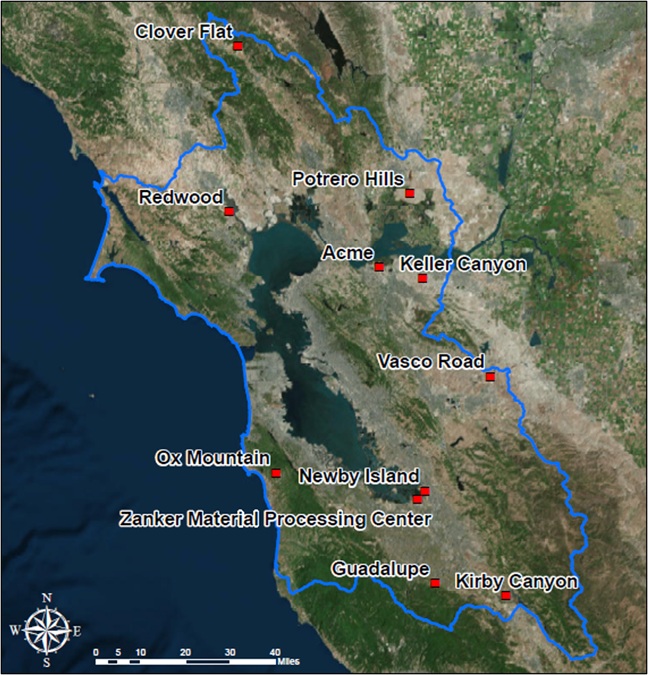
Figure 1. Locations of Active Landfills in the San Francisco Bay Region
Disposal Cell Construction
The photograph below, taken during construction of a disposal cell in one of the currently active landfills, shows the layers that make up the bottom liner of a modern landfill.
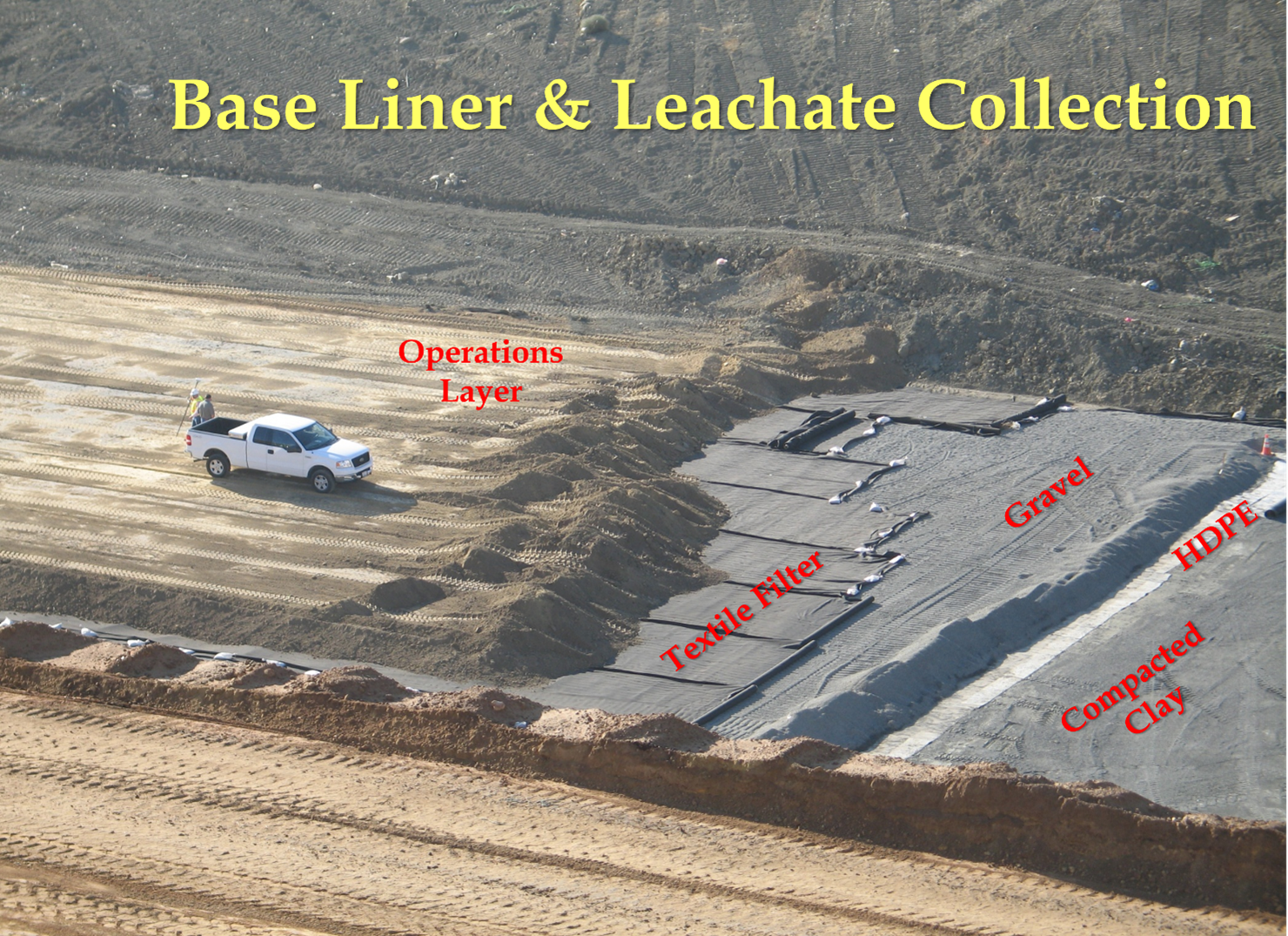
Figure 2. Photograph during cell construction at Potrero Hills Landfill
- Starting at the bottom layer (right side of Figure 2), there are at least 2 feet of compacted clay, which is relatively impermeable, but tends to crack if allowed to dry out. Landfill cells built before 1993 typically only had a compacted clay liner, if there was one at all. Geosynthetic clay liners can be used as an alternative if compacted clay is not available.
- The clay is overlain by an impermeable geomembrane typically composed of high-density polyethylene (HDPE). Together, the clay and the overlying HDPE layer form the base liner that is responsible for containing fluids and preventing them from leaking out of the landfill.
- The HDPE is overlain by at least one foot of pea gravel and the overlying textile filter. Together, the gravel and filter fabric make up the leachate collection and recovery system (LCRS). The gravel layer is intended to have very high permeability so that fluids can migrate through it. The filter fabric is intended to prevent fine soil particles from entering and plugging up the gravel.
- Finally, the LCRS is overlain by 18 to 24 inches of soil that is referred to as the operations layer. The purpose of the operations layer is to cushion and protect the underlying layers from being deformed or penetrated by large angular objects in the waste.
- Once this composite liner is in place across the disposal cell and approved by Regional Water Board staff, waste can then be placed in the cell on top of the operations layer.
Modern disposal cells provide significantly better waste containment and better protection against water quality impairment, compared to landfills built prior to the establishment of Title 27 regulations.
Closed Landfills
There are approximately 50 closed landfills in the San Francisco Bay Region. The closed landfills are older, with most of their operations occurring before modern landfill regulations were issued requiring composite bottom liners. Most of the closed landfills are located around the margin of the San Francisco Bay, whereas most of the newer, active landfills are in canyons away from the Bay and generally away from large population centers.
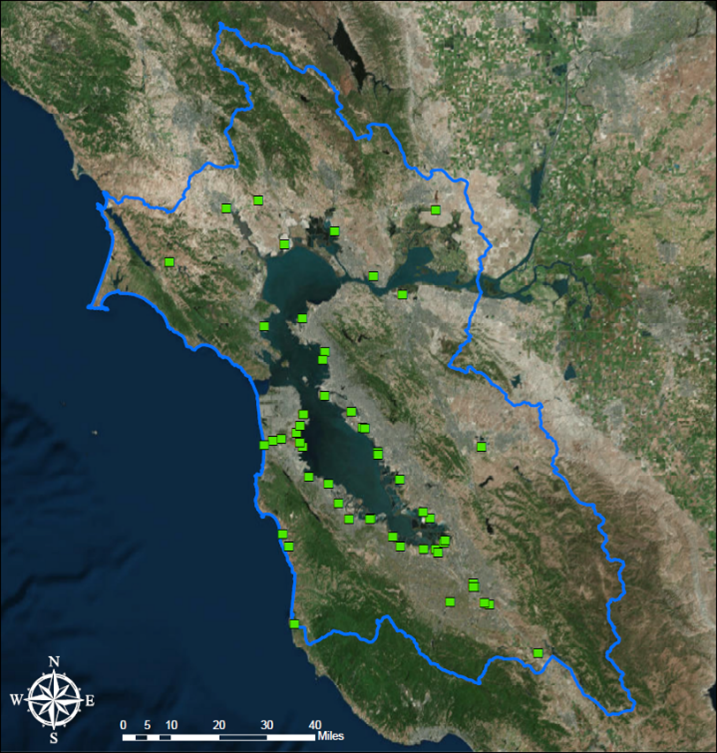
Figure 3. Locations of Closed Landfills in the San Francisco Bay Region
Landfill Closure
At some point, every landfill will reach its maximum size and height and will stop accepting wastes, becoming and termed as "inactive." For a landfill to be "closed," it not only has to have stopped accepting new waste, but also has had a final cover, or landfill cap, built over it. Title 27, Section 20950 describes the landfill closure process. The primary purpose of a landfill cap is to minimize infiltration of water into the waste mass so that leachate production is limited. A properly maintained cap also reduces the emission of landfill gases, such as carbon dioxide and methane, which are produced by the degradation of organic matter in the waste mass, and reduces the likelihood of physical exposure of the waste.
Post-Closure Maintenance and Monitoring
Prior to closure, each landfill must prepare and submit a post-closure maintenance plan (PCMP) to fulfill the requirements of Title 27, section 21769, including but not limited to an itemized cost analysis for closure and carrying out the first 30 years of maintenance, a closure schedule, final treatment procedures, a topographic map showing the site boundaries, and land use following closure. The Regional Water Board may also require a PCMP to address interruptions to landfill gas and leachate collection and mitigation systems, particularly following a major seismic event or significant settlement.
Title 27 specifies that a landfill must be monitored for at least 30 years after closure. The monitoring requirements are typically detailed in the Self-Monitoring Program for the landfill's WDRs and may include routine sampling of groundwater, leachate, stormwater, landfill gas, and any other environmental media that may pose a threat to water quality. A landfill may only be released from post-closure maintenance and monitoring upon demonstration to and approval by CalRecycle and the Regional Water Board that the landfill no longer poses a threat to human health, the environment, and water quality.
Redevelopment
As in other regions, many of our closed landfills are operated by the property owner as open space or public parks, which has very low risk of water infiltrating through the final cover and increasing leachate production. Several closed landfills are, or have been, used as golf courses, which is another low-impact type of use.
In the San Francisco Bay Region, because of the high value of land, especially in densely developed urban areas, many landfills have been developed for commercial purposes that generate revenue for the owner. This is generally not the case in most other Regions where the demand for developable land is not as great. A few closed landfills are utilized for production of compost or for stockpiling and/or production of construction materials such as soil, crushed concrete and asphalt, or roadbase aggregate.
Nine closed landfills in the San Francisco Bay Region have been developed for uses that required the construction of buildings over the landfill cap, as listed in the table below. Because of differential settlement and surface subsidence caused by the compaction and degradation of waste over time, buildings cannot be built directly on the landfill surface. Engineered support piles must be inserted through the waste mass into underlying geologic materials to support the building(s). This practice introduces potential vertical conduits through the landfill and inherently increases the likelihood of water entering the waste mass and leachate migrating through the base of the landfill into underlying groundwater.
| Landfill | Development Type |
|---|---|
| Burlingame | Top Golf Facility |
| Campisi Drive | Condominiums |
| Junipero Serra | Home Depot |
| Highway 237 | Office Park |
| Oyster Point | Office Park & Hotels |
| San Quentin | Target & Auto Dealership |
| Shoreline | Shoreline Amphitheater |
| Sierra Point | Office Park & Hotels |
| Westport | Office Park |
Two other landfills (Brisbane and Santa Clara) are being evaluated or have already been approved for extensive development. While the Regional Water Board does not have the authority to approve or deny such development, we have the authority to impose water quality protection requirements on the development. Regional Water Board staff review design and construction proposals and generally update the WDRs for the landfill to acknowledge any proposed change in land use that might affect water quality. Regional Water Board staff also carefully evaluate any proposal to penetrate a landfill with support piles or other construction methods so that water quality is protected.
Long-Term Flood Protection
There are more than 30 landfills, including both closed and operating facilities, located immediately adjacent to San Francisco Bay and the Pacific Ocean. There are also 8 industrial facilities, such as refineries and chemical plants, that have waste management units and/or surface impoundments located on or near the Bayfront. The locations of these facilities make them inherently vulnerable to sea level rise, extreme storm events, king tides, and groundwater rise which can occur when higher sea levels cause shallow water tables to rise.
Since 2009, as part of the routine update of WDRs, the Regional Water Board has included a requirement for preparation, submittal, and five-year updates of a Long-Term Flood Protection Plan for Bayfront and other low-elevation facilities recognized as vulnerable to climate change and sea level rise. In October 2022 and February 2024, we issued General WDRs to amend and update the requirements for flood protection planning and reporting because the available sea level rise predictions and guidance have changed significantly since 2009, in particular to include groundwater rise considerations. To date, the Regional Water Board has approved Long-Term Flood Protection Plans for almost 40 facilities.
What are PFAS?
Per-and Polyfluoroalkyl Substances (PFAS) are a family of more than 10,000 man-made and mostly unregulated chemicals that have been produced since the mid-1900s. They are extremely persistent in the environment, can be highly mobile and bioaccumulative, and may cause or are suspected of causing adverse health effects. They are resistant to degradation in the environment and when degradation occurs, it typically results in the formation of other PFAS compounds. The PFAS compounds have a wide range of physical and chemical properties but may be grouped into several chemical classes based on key functional groups. Currently, the key subgroups of concern are perfluoroalkane sulfonic acids, such as the long-chain perfluorooctane sulfonate (PFOS), and perfluoroalkyl carboxylic acids, such as perfluorooctanoic acid (PFOA).
PFAS are extremely persistent in the environment and highly mobile in water. People can be exposed to PFAS through food, food packaging, consumer products, house dust, and drinking water. Since these chemicals have been used in an array of consumer products, scientists have found PFOA and PFOS in the blood of nearly all people tested. Exposure through drinking water has become an increasing concern due to the tendency of PFAS to accumulate in groundwater.
PFAS Investigations at Active and Closed Landfills
In 2019, the State Water Board issued Order WQ 2019-0006-DWQ, which required nearly 200 landfills throughout California to conduct a one-time sampling event for the presence of PFAS in groundwater and leachate. Under this Order, PFAS testing was performed at 10 active and 17 closed municipal solid waste landfills within the San Francisco Bay Region. Groundwater sampling results indicated PFAS concentrations exceeding drinking water standards were present in 85% of the sampled landfills. Leachate sampling results indicated PFAS concentrations exceeding drinking water standards were present in almost all sampled landfills.
Based on the above results, it is reasonable to conclude that municipal solid waste landfills likely have PFAS-containing waste materials that concentrate PFAS compounds within leachate, as well as pose a risk to groundwater and surface water. Therefore, in 2025, the Regional Water Board issued an Order to require 12 additional landfills to sample PFAS in groundwater, leachate, gas condensate, and stormwater. To date, 4 landfills have completed their investigation, and the remaining landfills are expected to complete the requirements of the Order in 2027.
Landfill PFAS analytical data from previous investigations are available for public review and download through the State Water Board's interactive PFAS Map on GeoTracker. The Water Boards use GeoTracker to manage sites that impact, or have the potential to impact, water quality.
Composting Operations
The San Francisco Bay Water Board also regulates composting operations under a State Water Board General WDR order. Sites can enroll for coverage under the State Water Board Order. Below is some information regarding permits and documents:
- Composting operations that receive, process, and store at least 500 cubic yards of material at any given time are required to meet the permit conditions listed in the General Waste Discharge Requirements for Commercial Composting Operations Order WQ 2020-0012-DWQ. Please see the permit for exemptions.
- Information about required permits for composting operations can be found at the State Water Resources Control Board's Regulation of Composting Operations webpage.
- Documents related to composting operations can be found on GeoTracker by searching for the name of the permitted facility or by searching for a site specific GeoTracker Global ID. Associated San Francisco Bay Regional Water Board staff are listed on the top of each project specific GeoTracker Page.
Regulations
Land disposal site management is complex, requiring compliance with laws and regulations from multiple agencies. Below is a list of relevant regulations and orders relevant to the Water Boards' oversight:
- California Code of Regulations, title 27
- Code of Federal Regulations, title 40, part 258
- State Water Board General Orders for Land Disposal Facilities
- WQ 2019-0006-DWQ, Water Board Section 13267 Order for the Determination of the presence of Per-and Polyfluoroalkyl Substances
- WQ 2020-0004-DWQ, State Water Board General Waste Discharge Requirements for Disaster Related Wastes
- WQ 2020-0012-DWQ, State Water Board General Waste Discharge Requirements for Composting Operations
- San Francisco Bay Regional Water Board General Orders for Land Disposal Facilities
- R2-2020-0023, Amendments to Waste Discharge Requirements for Disposal and Onsite Use of Non-Designated/Non-Hazardous Contaminated Soils and Related Wastes at Active Municipal Solid Waste Landfills
- R2-2022-0031, Amendment to Waste Discharge Requirements for Long-Term Flood protection Considerations at Closed and Operating Municipal Solid Waste Bayfront Landfills
- R2-2024-0002, Long-Term Flood Protection Requirements at Oceanfront and Bayfront Municipal Solid Waste Landfills and Industrial Facilities
- R2-2025-0005, Technical Reporting Order for the Determination of the Presence of Per-and Polyfluoroalkyl Substances (PFAS) at Selected Landfills
Contacts
Program Manager
Angus Chan, Senior Water Resource Control Engineer
Angus.Chan@waterboards.ca.gov
(510) 622-2363
County/LEA Liaisons
Marin County, Napa County:
Alyx Karpowicz, Engineering Geologist
Alyx.Karpowicz@waterboards.ca.gov
(510) 622-2427
Santa Clara County:
Angus Chan, Senior Water Resource Control Engineer
Angus.Chan@waterboards.ca.gov
(510) 622-2363
Contra Costa County, Sonoma County:
Amita Muralidharan, Water Resource Control Engineer
Amita.Muralidharan@waterboards.ca.gov
(510) 622-2326
San Francisco County, Solano County:
Fangli Yin, Water Resource Control Engineer
Fangli.Yin@waterboards.ca.gov
(510) 622-2406
Alameda County, San Mateo County:
Nathan Lopez-Veale, Engineering Geologist
Nathan.Veale@waterboards.ca.gov
(510) 622-2336

