



Tribal Beneficial Uses Progress Updates Across the Water Boards
All ten Water Boards are at different stages in their processes to designate Tribal Beneficial Uses in their water quality control plans (basin plans). To initiate a Tribal Beneficial Uses designation request, please contact the point of contacts below.
Regional Water Boards Progress Updates
Triennial Review: The North Coast Regional Water Board prioritized the Tribal Beneficial Uses project in its Triennial Review process in 2023. There were three letters of support from the following Tribes encouraging the North Coast Water Board to prioritize TBUs in the Triennial Review process: Coyote Valley Band of Pomo Indians, Potter Valley Tribe, and Tolowa Dee-ni’ Nation. Letters of support were also submitted by the Karuk Tribe and Quartz Valley Indian Reservation during the 2018 triennial review.
Adding Definitions: The North Coast Regional Water Board adopted a basin plan amendment to add a Native American Culture TBU definition into its basin plan in 2003. The North Coast Water Board’s Native American Culture (CUL) beneficial use contains slightly different language than the State Water Board’s TBUs (CUL and T-SUB), encompassing all activities from both State Water Board TBUs in the North Coast’s CUL beneficial use.
Designating Waterbodies: As part of the 2003 North Coast Basin Plan amendment to adopt the Native American Culture beneficial use definition, 28 individual named waterbody segments were designated with the CUL use as well as the general categories of minor coastal streams, freshwater and saline wetlands, groundwater, bays and estuaries throughout the region. The North Coast Regional Water Board re-initiated the basin plan amendment project to designate additional waterbodies in 2025. North Coast Water Board staff are working with Tribes in the region to develop a designation template that will be available to support new designation requests.
Opportunities to Engage: The North Coast Regional Water Board opened the Tribal consultation process for this project in May 2025 and consultation is open through 2026. North Coast Water Board staff have met with six Tribes in either formal consultation or informational meetings and are currently scheduling more. In the next year, the North Coast Regional Water Board staff will be meeting with Tribal Advisors, holding staff-led Tribal workshops and a CEQA scoping meeting, and presenting an information item about this project at a Board meeting.
- To visit the North Coast Water Board’s Native American Culture Beneficial Uses project website, visit: Native American Culture Beneficial Uses | California Northcoast Regional Water Quality Control Board
- To sign up to receive email updates on this project, visit: North Coast Water Board email subscription
- To initiate the TBU designation process, or for any questions, please contact Michelle Fuller at michelle.fuller@waterboards.ca.gov or (707)576-2350.
Triennial Review: The San Francisco Bay Regional Water Board prioritized the Tribal Beneficial Uses project in its Triennial Review process in 2024. There was one letter of support from San Francisco Baykeeper encouraging the San Francisco Bay Water Board to prioritize TBUs in the Triennial Review process.
Adding Definitions: The San Francisco Bay Regional Water Board adopted a basin plan amendment to add the TBU definitions into its basin plan in 2026. The amendment is currently under review by the State Water Board and is anticipated to be approved in August of 2026.
Designating Waterbodies: There has been a total of three designation requests submitted by the following Tribes: Mishewal Wappo of Alexander Valley, Confederated Villages of Lisjan, and Federated Indians of Graton Rancheria. The San Francisco Bay Regional Water Board initiated the basin plan amendment process to designate waterbodies in 2022. The San Franisco Bay Water Board is currently working with Tribes to determine which waterbodies will be designated for Tribal Culture and Tradition (CUL) use.
The project to designate CUL and Tribal Subsistence Fishing (T-SUB) in the San Francisco Bay Region is split in two separate, but concurrent phases shown below.
Tribal Culture and Tradition Designation
- Designate waterbodies for the CUL beneficial use after consulting with Tribes.
- Evaluate existing water quality objectives for waterbodies designated for CUL use and determine if additional water quality objectives are needed to be protective of CUL uses.
Tribal Subsistence Fishing
- Initiate development of Tribal subsistence fishing surveys to inform T-SUB beneficial uses and work toward designating T-SUB where appropriate.
Opportunities to Engage: The San Francisco Bay Regional Water Board has conducted Tribal consultations and previously held a Tribal summit in 2022. The San Francisco Bay Regional Water Board is working towards designating waterbodies for CUL beneficial uses and is accepting requests from Tribes on a rolling basis.
- To visit the San Francisco Bay website on the TBU project, visit: Tribal Beneficial Uses (TBU) Basin Plan Update
- To initiate the TBU designation process, to be included on our email list for updates, or for any questions, please contact Joelle Arakaki at joelle.arakaki@waterboards.ca.gov and (510)622-2425.
Triennial Review: The Central Coast Regional Water Board prioritized the Tribal Beneficial Uses (TBUs) project in its Triennial Review process in 2024. There were two of letters of support from the following Tribes encouraging the Central Coast Regional Water Board to prioritize TBUs in the Triennial Review process: the Santa Ynez Band of Chumash Indians and the Amah Mutsun.
Adding Definitions: The Central Coast Regional Water Board adopted a basin plan amendment to add the TBU definitions into its basin plan in 2024; the amendment was approved by the State Water Board in 2025, by the Office of Administrative Law in 2025, and by the U.S. Environmental Protection Agency in 2025.
Designating Waterbodies: There has been a total of two designation requests submitted by the following Tribes: the Santa Ynez Band of Chumash Indians and the Amah Mutsun. Staff have not yet identified the resources needed to conduct the research required for TBU designations. Because TBU designations must be led and supported by Tribes, progress on this project necessarily remains focused on outreach, trust building, and supporting Tribes’ ability to engage in future designation processes.
Opportunities to Engage: The Central Coast Regional Water Board has conducted Tribal consultations and would like to hold a Tribal summit. The Central Coast Regional Water Board will be conducting the next Triennial Review in 2027 that will include Tribal outreach, a public workshop, the opportunity for public comment, and a Board meeting.
- To visit the Central Coast Regional Water Board website for more information or to sign up to receive email updates, visit: Basin Plan Program | Central Coast Regional Water Quality Control Board
- To initiate the TBU designation process, or for any questions, please contact Jamie Pratt at jamie.pratt@waterboards.ca.gov and (805)549-3761.
Triennial Review: The Los Angeles Regional Water Board prioritized the Tribal Beneficial Uses project in its Triennial Review process in 2020-2022, 2023-2025 and 2026-2028. There was one letter of support from the following Tribe encouraging the Los Angeles Water Board to prioritize TBUs in the 2020-2022 Triennial Review process: the Kizh Nation.
Adding Definitions: The Los Angeles Regional Water Board adopted a basin plan amendment to add the TBU definitions into its basin plan in 2022; the amendment was approved by the State Water Board in 2022, and the Office of Administrative Law approved in 2023. The Los Angeles Regional Water Board is still waiting for U.S. Environmental Protection Agency’s acknowledgement.
Designating Waterbodies: The Los Angeles Regional Water Board has not received any designation requests by any Tribes.
Opportunities to Engage: The Los Angeles Regional Water Board has conducted Tribal-only meetings, on March 26, 2021, and October 30, 2024, and a public workshop on September 23, 2021.
- To initiate the TBU designation process, or for any questions, please contact Stefani Daryanto at stefani.daryanto@waterboards.ca.gov or (213) 576-6763.
Triennial Review: The Central Valley Regional Water Board initially added the Tribal Beneficial Uses project in its 2018 Triennial Review and prioritized it in its Triennial Review process in 2024. There were five letters of support from the following Tribes encouraging the Central Valley Water Board to prioritize TBUs in the Triennial Review process: Tuolumne Me-Wuk Tribal Council, Big Valley Band of Pomo Indians, Elem Indian Colony, the Robinson Rancheria, and the Pit River Tribe. Additional support letters were received from Restore the Delta, Save California Salmon, Pacific Coast Federation of Fishermen's Associations, and Institute for Fisheries Resources.
Adding Definitions: The Central Valley Regional Water Board adopted a basin plan amendment to add the TBU definitions into its basin plan in February 2022; the amendment was approved by the State Water Board in September 2022; the Office of Administrative Law approved in 2024, and U.S. Environmental Protection Agency approved in 2025.
Designating Waterbodies: In total, there have been 15 designation requests submitted by the following Tribes: Tuolumne Me-Wuk Tribal Council, Big Valley Band of Pomo Indians, Elem Indian Colony, the Robinson Rancheria, the Pit River Tribe, Buena Vista Rancheria of Me-Wuk Indians, Middletown Rancheria of Pomo Indians, Enterprise Rancheria Estom Yumeka Maidu Tribe, Mooretown Rancheria, Santa Rosa Rancheria Tachi-Yokut Tribe, Southern Sierra Miwuk Nation, United Auburn Indian Community, Wilton Rancheria, Mishewal Wappo of Alexander Valley, and Lisjan Nation. The Central Valley Regional Water Board initiated the basin plan amendment process to designate waterbodies in February 2026. The basin plan amendment is proposing to designate Tribal Culture and Tradition (CUL) in certain waterbodies throughout Sacramento, San Joaquin, and Tulare Lake Basins. The current Basin Plan Amendment proposing CUL beneficial use designation in waterbodies where tribal use could potentially be protected by existing water quality objectives, and which do not currently have impairment listings for REC-1 or COMM in the 2024 303(d) Integrated Report. Waterbodies that don’t meet these criteria are still eligible for TBU designations, but the proposal to designate them will be addressed through subsequent Basin Plan Amendments.
Opportunities to Engage: The Central Valley Regional Water Board has conducted two AB52 Tribal consultations and has held staff workshop meeting in 2018, two Tribal summits in 2019, multiple individual Tribal consultations, semi-annual Tribal-only workshops since 2022, and a CEQA scoping meeting on 15 May 2026. Written comments relevant to CEQA are being received during the window of until 15 June 2026.
- To visit the Central Valley Water Board’s website on the TBU project, visit: Tribal Beneficial Uses Designations | Central Valley Regional Water Quality Control Board
- To sign up to receive email updates on this project, visit: Region 5 - Tribal Beneficial Uses
- To initiate the TBU designation process, or for any questions, please contact Sajleen Phagura at RB5S-TBU@waterboards.ca.gov or 916-464-4700
Triennial Review: The Lahontan Water Board has prioritized the Tribal Beneficial Uses project in every Triennial Review process since 2018. In the 2018 Triennial Review Process, the Lahontan Water Board received of letters of support from the following Tribes encouraging the Lahontan Water Board to prioritize TBUs in the Triennial Review process: Mono Lake Kootzaduka’a, Bishop Paiute Tribe, Big Pine Paiute Tribe, Lone Pine Paiute Shoshone Reservation, and the Owens Valley Indian Water Commission.
Adding Definitions: The Lahontan Water Board adopted a basin plan amendment to add the TBU definitions into its basin plan on September 16, 2020; the amendment was approved by the State Water Board on May 18, 2021, the Office of Administrative Law approved September 22, 2021, and U.S. Environmental Protection Agency approved December 1, 2021.
Designating Waterbodies: The Lahontan Water Board has received designation requests from the Mono Lake Kootzaduka’a, Big Pine Paiute Tribe, Washoe Tribe of Nevada and California, and the Bridgeport Indian Colony. Other Tribes, such as the Bishop Paiute Tribe and the Lone Pine Paiute Shoshone Tribe have also indicated interest in the Lahontan Water Board designating TBUs.
In late 2022, the Lahontan Water Board began developing a Basin Plan amendment to designate TBUs for Mono Lake and other waters in the Mono Basin. In fall 2024, after developing a staff report and Basin Plan amendment, the Lahontan Water Board, in consultation with the Mono Lake Kootzaduka’a, put the project on hold to better understand and prepare for designating the Tribal Subsistence Fishing beneficial use to tributary streams and lakes in the Mono Basin. The forthcoming guidance prepared by the State Water Board will be used to inform the Mono Basin TBU designation process, which was re-started in fall 2025.
In December 2025 the Lahontan Water Board initiated a broader effort to designate TBUs be re-engaging with Tribes that previously expressed interest in designating TBUs. In May 2025 the Lahontan Water Board sent letters to gauge interest in TBU designation among the many other Tribes that are connected to the waters of the Lahontan Region.
Opportunities to Engage: The Lahontan Water Board held a Tribal Summit in June 2022 which was attended by representatives from 11 Tribes. Subsequently, when working on TBU designations in the Mono Basin, the Lahontan Water Board staff met with several Tribes in December 2023. At its April 2024 meeting, the Lahontan Water Board hosted a public hearing on Mono Basin TBUs, during which representatives from the Mono Lake Kootzaduka’a and other eastern California Tribes testified to their history and relationship with Mono Lake and other eastern Sierra waters. The Mono Basin TBU project is anticipated to develop as 2026 progresses, and there will be opportunity for public engagement in 2027.
- To visit the Lahontan Water Board website on the TBU project, or to sign up to receive email updates on this project, visit: Tribal and Subsistence Fishing Beneficial Uses
- To initiate the TBU designation process, or for any questions, please contact Daniel Sussman at daniel.sussman@waterboard.ca.gov or 530-546-5466.
Triennial Review: The Colorado River Basin Regional Water Board has prioritized the Tribal Beneficial Uses project in its Triennial Review process in 2020 and 2023. The Colorado River Basin Regional Board also prioritizes Tribal issues in a criterion for Triennial Review scoring. There was one of letter of support from the Morongo Band of Mission Indians encouraging the Colorado River Basin Regional Water Board to prioritize TBUs in the Triennial Review process.
Adding Definitions: The Colorado River Basin Regional Water Board adopted a basin plan amendment to add the TBU definitions into its Basin Plan in 2024; the amendment was approved by the State Water Board in 2025. The administrative record for the Tribal Beneficial Uses Basin Plan Amendment has been submitted to the State Water Resources Control Board for review and submittal to the Office of Administrative Law.
Designating Waterbodies: There have been no designation requests submitted by Tribes with current and ancestral ties to Colorado River Basin Region. The Colorado River Basin Regional Water Board is undertaking outreach to share information about Tribal Beneficial Uses with Regional Tribes as separate consultations occur and will begin additional Tribal Beneficial Uses outreach in the future to inform Tribes about the designation process and determine Tribal interest in designation.
Opportunities to Engage: The Colorado River Basin Regional Water Board has conducted Tribal consultations and has held individual Tribal consultations and individual tribal meetings in 2026 related to Tribal Beneficial Use designation. The Colorado River Basin Regional Water Board welcomes future engagement with Tribes to discuss Tribal Beneficial Use designations. Letters, questions, phone calls, and comments are also appreciated by our Regional Water Board staff.
- To visit the Colorado River Basin Regional Water Board website on the TBU project, and to sign up to receive email updates on Basin Planning projects, please visit: Basin Planning
- To initiate the TBU designation process, or for any questions, please contact the Regional Board’s Tribal Coordinator, Samantha Shapiro, at RB7-Tribal@Waterboards.ca.gov, Samantha.Shapiro@waterboards.ca.gov, or (760) 313-1297.
Triennial Review: The Santa Ana Regional Water Board prioritized the Tribal Beneficial Uses project in its Triennial Review process in 2024 to 2027. The Santa Ana Regional Water Boord has received support from the Yuhaaviatam of San Manuel Nation and Agua Caliente Band of Cahuilla Indians regarding TBU designations.
Adding Definitions: The Santa Ana Water Regional Water Board is currently working on a basin plan amendment to add the TBU definitions into its basin plan by 2027.
Designating Waterbodies: There have been no formal designation requests submitted by Tribes with current and ancestral ties to the Santa Ana River and its tributaries Basin Region. The Santa Ana Regional Water Board will undertake outreach to share information about TBUs and formal consultations will occur in the future to inform Tribes about the designation process and determine Tribal interest in designation.
Opportunities to Engage: The Santa Ana Regional Water Board has conducted Tribal consultations and has held Tribal-only workshops to discuss TBUs and mercury provisions in 2020 and 2024. The Santa Ana Regional Water Board welcomes future engagement with Tribes to discuss TBU designations.
- To sign up to receive email updates on Basin Planning projects, visit: Santa Ana Water Board email subscription
- To initiate the TBU designation process, or for any questions, please contact Claudia Tenorio at claudia.tenorio@waterboards.ca.gov or via phone number 951-782-4963.
Triennial Review: The San Diego Regional Water Board prioritized the Tribal Beneficial Uses project in its Triennial Review process in 2021. The project continues to be identified as a high priority project during the 2024/2025 Triennial Review.
Adding Definitions: The San Diego Regional Water Board adopted a basin plan amendment to add the TBU definitions into its basin plan on December 8, 2020; the amendment was approved by the State Water Board in 2021, the Office of Administrative Law approved in 2021.
Designating Waterbodies: The San Diego Regional Water Board is currently working with Tribes to determine which waterbodies will be designated for Tribal Culture and Tradition (CUL) use; however, no formal requests have been submitted for specific waterbodies.
The San Diego Regional Water Board participated in the SWAMP Bioaccumulation Monitoring Program (Program) Realignment in the San Diego Region in 2022 – 2023. The Program Realignment effort was undertaken to better assess the condition of fish and shellfish for the purpose of consumption by Tribal and subsistence persons in the San Diego Region.
Opportunities to Engage: The San Diego Regional Water Board has held ongoing informal meetings with some Tribal representatives. Staff has also initiated monthly office hours to gather feedback or answer any questions from Tribal Nations on the TBU project.
- To visit the San Diego Regional Water Board website on the TBU project, visit: The Basin Plan | San Diego Regional Water Quality Control Board
- To sign up to receive email updates on this project, visit: California Water Boards (select: Tribal Beneficial Uses)
- To initiate the TBU designation process, or for any questions, please contact Ms. Jody Ebsen at jody.ebsen@waterboards.ca.gov or at (619) 521-3965.
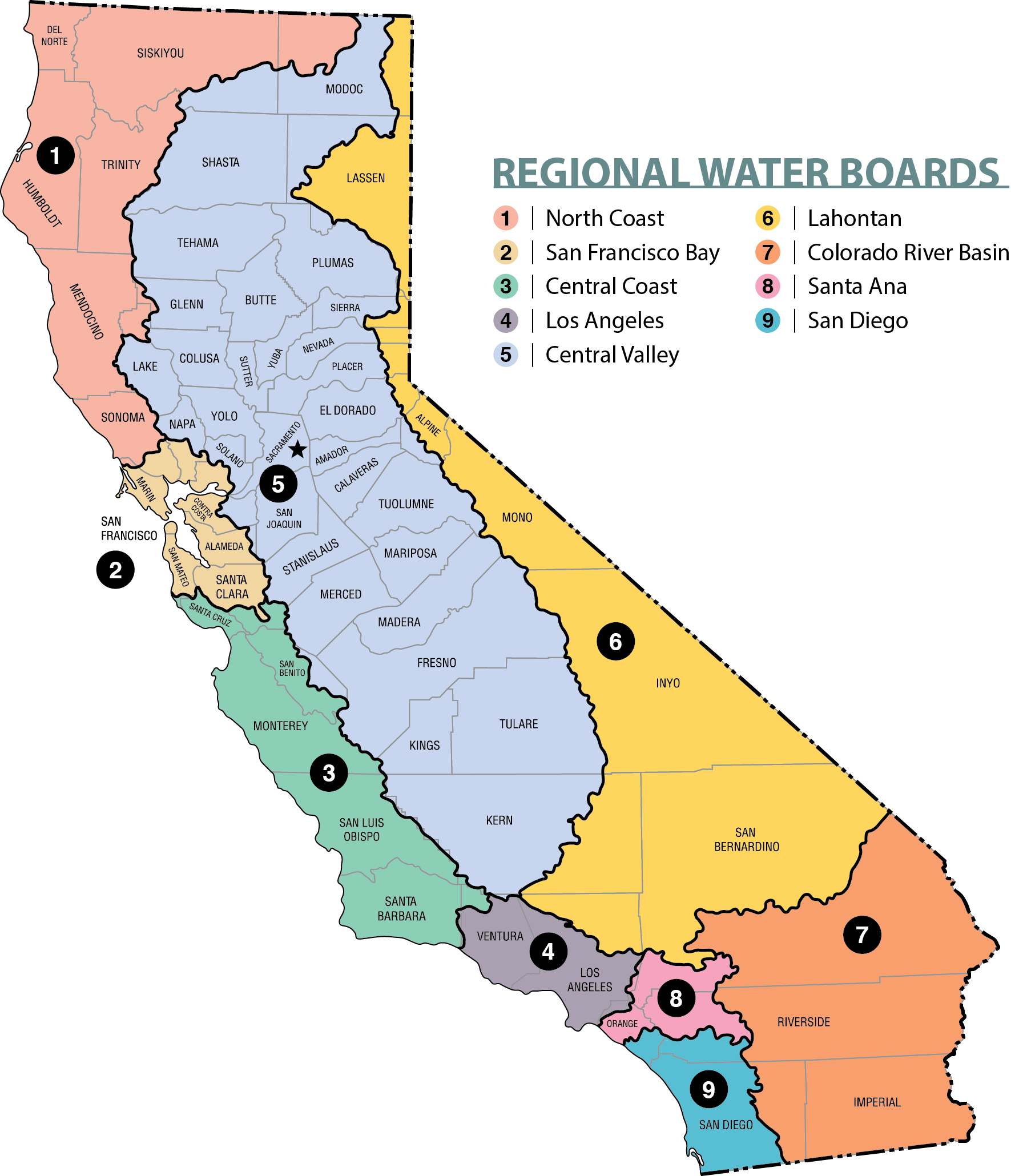
Regional Water Boards Map
State Water Board Progress Updates
Triennial Review: See the State Water Board’s Division of Water Quality update on the review of State Water Board plans and policies for more information.
Adding Definitions: The State Water Board Division of Water Rights is proposing to add both the Tribal Tradition and Culture (CUL) and Tribal Subsistence Fishing (T-SUB) definitions to the Bay-Delta Plan as part of the Sacramento/Delta Update to the Bay-Delta Plan. The State Water Board will consider adoption of the update to the Bay-Delta Plan in late 2026.
Designating Waterbodies: The Sacramento/Delta Update to the Bay-Delta Plan proposes to designate Tribal Tradition and Culture (CUL) beneficial use watershed wide. The CUL beneficial use is proposed to be designated watershed wide due to the cultural and spiritual importance of native fish and wildlife, particularly salmon, to California Native American Tribes in the watershed. Salmonids utilize the entire watershed both temporally and spatially at various life stages, and the Tribes’ cultural and spiritual use is centered on the connectivity between these species and themselves and their ancestors.
The designation of CUL within the Bay-Delta watershed is based on substantial evidence provided to the State Water Board through Tribal outreach and engagement efforts. Tribal representatives shared through written and verbal testimony the significance of salmon within Tribal culture, including creation stories, as a centerpiece of traditional ceremonies and feasts (such as traditional salmon bakes), and the general correlation of Native American life ways with the timing and locations of northern California salmon runs.
Opportunities to Engage: The Division of Water Rights has held many State Water Board meetings, board workshops, Tribal-only workshops, Tribal briefings, and working meetings since the release of the draft Staff Report in 2023. Written comments on the Sacramento/Delta Update to the Bay-Delta Plan were received during the windows of September 28, 2023 – January 19, 2024 (draft Staff Report), October 25, 2024 – December 19, 2024 (draft Bay-Delta Plan), December 12, 2025 – February 2, 2026 (partially recirculated draft Staff Report and revised draft Bay-Delta Plan).
- To learn more about the Bay-Delta Plan and TBU project, visit: Bay-Delta Watershed Comp Review
- To sign up to receive email updates on this project, visit: Bay-Delta Notices mailing list
- To initiate the TBU designation process, or for any questions, please contact Robert McCarthy at robert.mcarthy@waterboards.ca.gov

