



Coastal Beach Safety Monitoring
600+
beach monitoring sites~150 million
beach visits a year~80,000
samples collected a yearCalifornia's 630+ miles of beaches draw millions of visitors who spend over $30 billion each year.
The Coastal Beach Safety Monitoring Program (Beach Program):
- Tests waters at public beaches within the coastal zone or within the jurisdiction of the San Francisco Bay Conservation and Development Commission
- Notifies the public of unsafe water quality
By having current information about bacteria levels in beach water, people can make informed decisions and protect themselves from potential illness.
What are the risks?
Bacteria from sewage spills, storm drain discharges, and urban runoff are not always visible or detectable by smell, but can cause illness in people who swim, surf, or wade in contaminated water, including:
- Fever
- Vomiting
- Throat and eye infections
- Other serious illnesses
Check Before You Swim
Find current posting and closure advisories for your area at the telephone hotline or website listed on our General Public Fact Sheet (English | Spanish) or through the local agency program pages.
Statewide posting and closure data are also available and updated weekly on the California Water Quality Monitoring Council's Safe to Swim page.



Who Runs the Beach Program
The State Water Board administers the Beach Program statewide by:
- Setting monitoring protocols
- Overseeing data quality
- Distributing funds
The 16 local environmental health agencies (local health agencies) across California's coastal and San Francisco Bay Area counties:
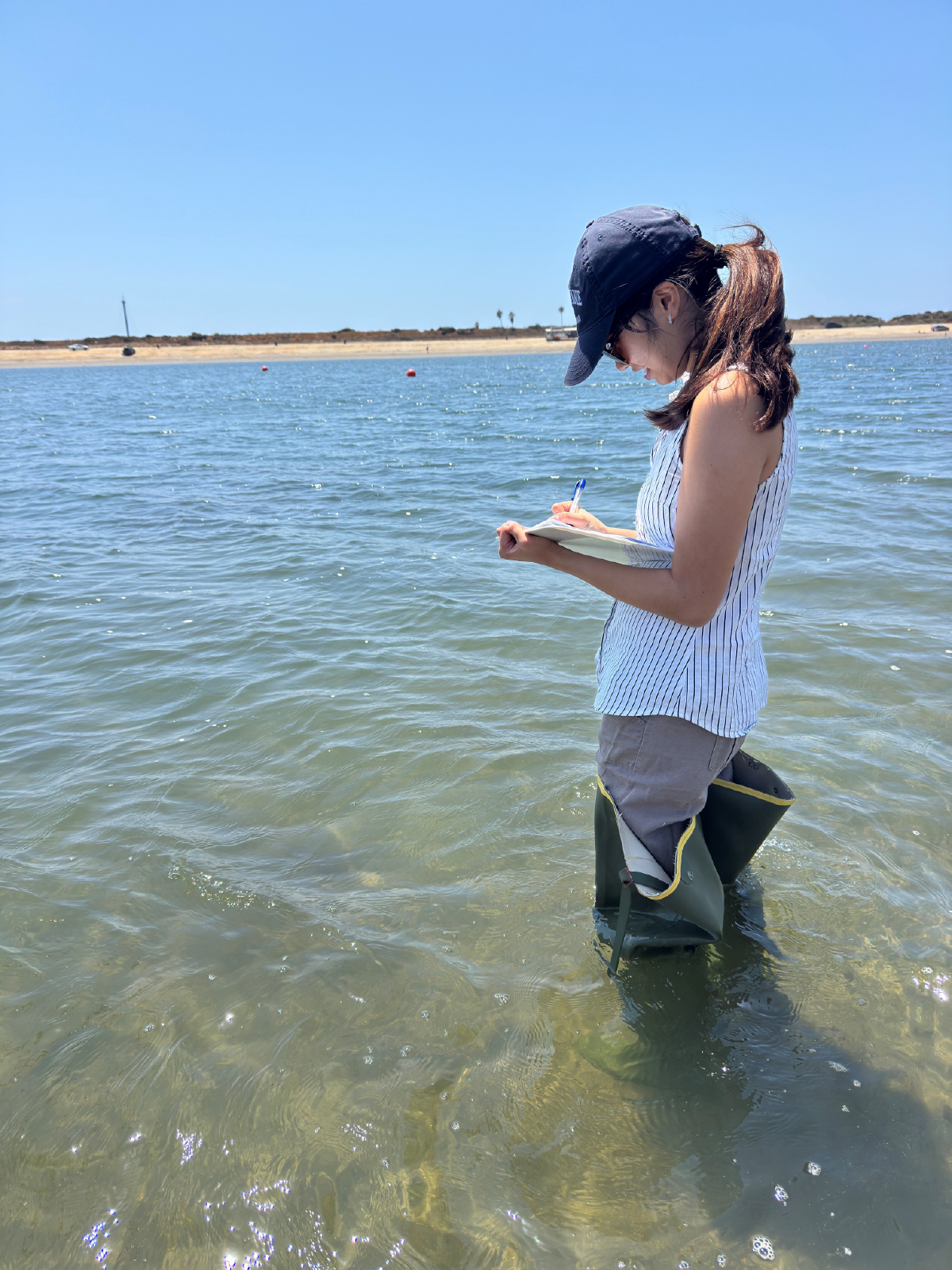
- Monitor public beaches
- Issue posting and closure advisories
What Gets Tested
These agencies conduct routine sampling and analysis of three bacterial indicators:
- Total coliform
- Fecal coliform
- Enterococcus
Water testing results are uploaded to BeachWatch, the statewide database and central source of California beach water quality information.
Postings
Local agencies issue postings about affected public beaches to warn the public that water contact may cause illness due to bacteria levels.
A posting doesn’t mean the beach is necessarily closed. It warns the public, and people can choose whether to enter the water.
Closures
Beach closures are issued separately and immediately during emergency events and whenever a sewage spill reaches or may reach the ocean.
Closed beaches remain off limits until follow-up testing confirms the water is safe.
Rain Advisories
Many agencies also issue rain advisories, which caution the public to stay out of the water during storms and for up to three days afterward due to runoff-related contamination.
Program News and Updates
- Beach Program Fact Sheets
- Next Coastal Beach Water Quality Workgroup meeting: November 2026
- The Coastal Beach Workgroup meets twice a year - in the spring and fall. Meetings are chaired by the State Water Board Beach Program staff and include participation from the local health agencies that monitor beach water quality. More information can be found on the Coastal Beach Water Quality Workgroup webpage.
- Updates to BeachWatch: Completed January 2026
- Updates included new data fields and data validation conditions to maintain compatibility with CEDEN 2.0 and U.S. EPA requirements
Stay Informed
Subscribe to the California Coastal Beach Water Quality Workgroup email lists to receive notifications and the latest updates.
Local Health Agency Jurisdictional Monitoring
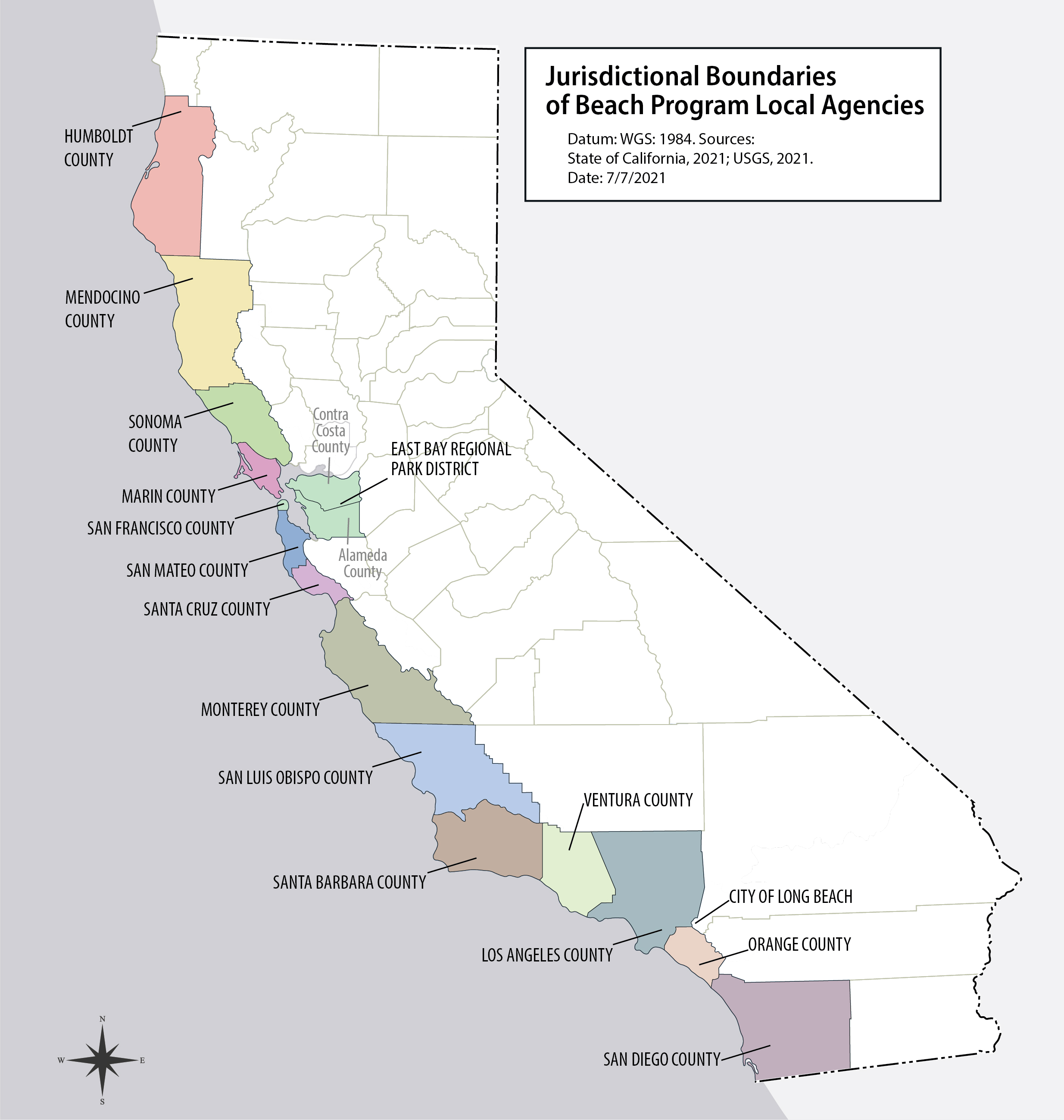
Local Agency Program Pages
- East Bay Regional Park District (covers Alameda and Contra Costa Counties)
- Humboldt
- Long Beach
- Los Angeles
- Marin
- Mendocino
- Monterey
- Orange
- San Diego
- San Francisco
- San Luis Obispo
- San Mateo
- Santa Barbara
- Santa Cruz
- Sonoma
- Ventura
Legal Foundation and Funding
The Beach Program is grounded in a combination of state and federal law, including Assembly Bill 411 (Wayne, 1997), sections of the California Health and Safety Code, Title 17 of the California Code of Regulations, and the federal Beaches Environmental Assessment and Coastal Health BEACH Act. Together, these establish the program’s:
- Monitoring frequency and locations
- Water quality standards
- Public notification requirements
Annual funding comes from a mix of state allocations and federal BEACH Act grant awards, which support local agency monitoring and advisory notifications.
AB 411 established California's beach water quality monitoring program and amended Health and Safety Code Section 115880-115915. AB 411:
- Requires weekly bacterial testing from April 1 to October 31 at public beaches:
- Visited by more than 50,000 people each year and
- Located near a storm drain that flows in the summer
- Directs the California Department of Health Services (now the California Department of Public Health or CDPH) to adopt minimum bacterial standards and posting requirements, the foundation of today's Beach Program
These Health and Safety Code sections contain the core legal requirements for protecting public health at California's public beaches. They:
- Establish minimum sanitation standards for beaches
- Require bacterial monitoring of waters along high-use beaches near storm drains
- Direct local health officers to:
- Inspect beaches
- Investigate complaints
- Post warning signs when standards are exceeded
- Close beaches when untreated sewage reaches the water
Title 17 contains the regulations that implement the Health and Safety Code requirements for ocean beaches and water-contact sports areas. It sets the specific numeric bacterial standards for total coliform, fecal coliform, and enterococcus that trigger postings and closures, defines how and where samples must be collected, and outlines the corrective actions local health officers must take when standards are not met.
SB 482 (Kehoe, 2011) transferred responsibility for directing California's beach water quality monitoring program from the CDPH to the State Water Board, effective January 2012. Under this change, the State Water Board became responsible for establishing and reviewing monitoring protocols, site locations, and monitoring frequencies, while local health agencies continue to carry out monitoring and issue postings and closures within their jurisdictions. The CDPH retains the responsibility to establish, maintain, and amend as necessary, minimum protective bacteriological standards.
AB 1876 (Chan, 2004) expanded California's beach monitoring program by extending the definition of "public beach" to include public beaches within the jurisdiction of the San Francisco Bay Conservation and Development Commission. This brought Bay Area beaches under the same monitoring framework that already applied to ocean beaches along the California coast.
The BEACH Act amended the federal Clean Water Act to strengthen water quality protections at the nation's coastal and Great Lakes beaches by:
- Directing the U.S. Environmental Protection Agency to set recreational water quality criteria
- Providing grant funding to states for beach monitoring and public notification programs
California uses BEACH Act grant funding to support local agency monitoring and the statewide BeachWatch database.
California is committed to monitoring, improving, and protecting beaches along its coast. The State Water Board currently allocates about $2.3 million of state and federal grant funds annually to the local health agencies based on their program size and number of mandated monitoring locations.
In addition to monitoring our coastal water quality, California also invested an additional $100 million in Clean Beach Initiative grants to fund local projects that reduce bacterial contamination along the coast.
Reliable monitoring depends on reliable data. The State Water Board maintains a statewide Quality Assurance Program Plan for the Beach Program that sets consistent standards for how samples are collected, handled, and analyzed across all sixteen participating agencies.
- Laboratories analyzing beach water samples must be accredited through California's Environmental Laboratory Accreditation Program (ELAP) and follow analytical methods approved under the federal Clean Water Act.
- Local agencies follow quality assurance and quality control procedures, including those in the Quality Assurance Program Plan, which describe sampling locations, collection techniques, and laboratory methods used.
More information on quality assurance can be found on these U.S. EPA and State Water Board quality assurance and quality control websites.
All monitoring results flow into BeachWatch, the State Water Board's statewide beach water quality database. From there, data are shared with the California Environmental Data Exchange Network (CEDEN), which makes California's surface water quality information publicly available in one central location, and with the U.S. EPA's Beach Advisory and Closing Online Notification (BEACON) system, the federal database for beach water quality nationwide.
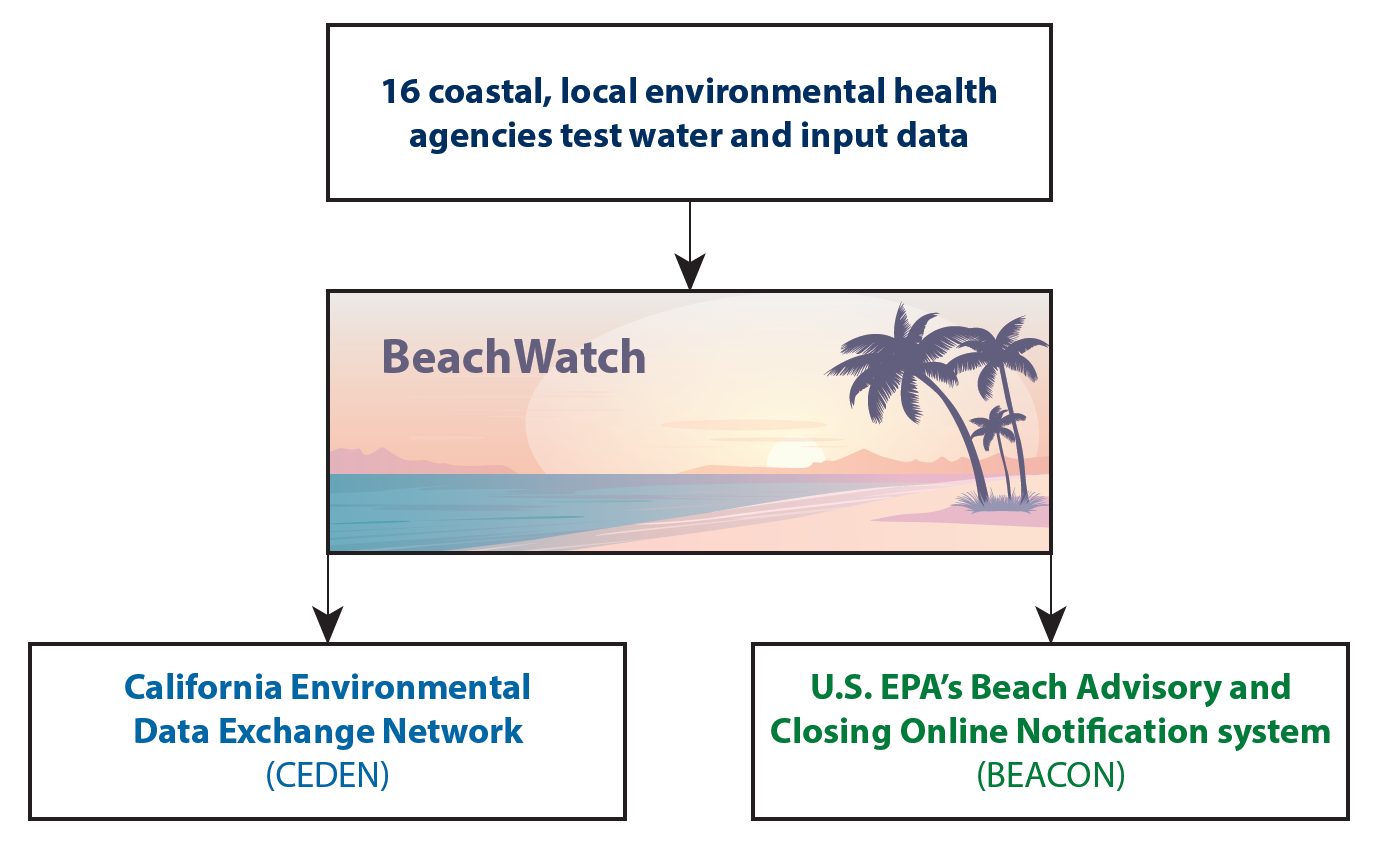
This connected system allows beach water quality data to support a range of uses, from day-to-day public health decisions by local agencies to statewide water quality assessments and federal reporting.
Additional Resources and Reports
- California Open Data Portal
California's historical beach water quality monitoring results and posting and closure records, with data sourced from BeachWatch. - State Water Boards Bacterial Objectives
The State Water Board's statewide bacteria water quality objectives in the Ocean Plan and ISWEBE Plan to protect recreational users from pathogens in California's surface waters. - Heal The Bay Weekly Beach Report Card
This weekly report provides a third party rating system that evaluates beach water quality in California based on the previous 30 days of monitoring. - Surfrider Foundation - Blue Water Task Force
The Blue Water Task Force is Surfrider Foundation's volunteer-run beach water quality monitoring program, which tests fecal indicator bacteria at sampling sites nationwide to complement agency-run monitoring. - Beachapedia
Maintained by the Surfrider Foundation, this online encyclopedia covers beach water quality, coastal ecology, pollution sources, and beach-related policy, drawing on decades of activist, scientific, and staff knowledge from coastal campaigns nationwide.

Contacts
For questions or comments, send an email to DWQ-Beach-Monitoring@waterboards.ca.gov

