



Tribal Beneficial Uses Data, Tools, and Resources
This webpage serves as a centralized resource for maps, data tools, and resources to support designation and protection of Tribal Beneficial Uses (TBUs).
Preparing for Tribal Beneficial Use Designation Requests
To initiate a request to designate specific waterbody(s) with a Tribal Beneficial Use, a letter from a California Native American Tribe must be submitted. The Guidance on Designating Tribal Beneficial Uses provides more information on the designation process. The following are resources to support the development of designation request letters.
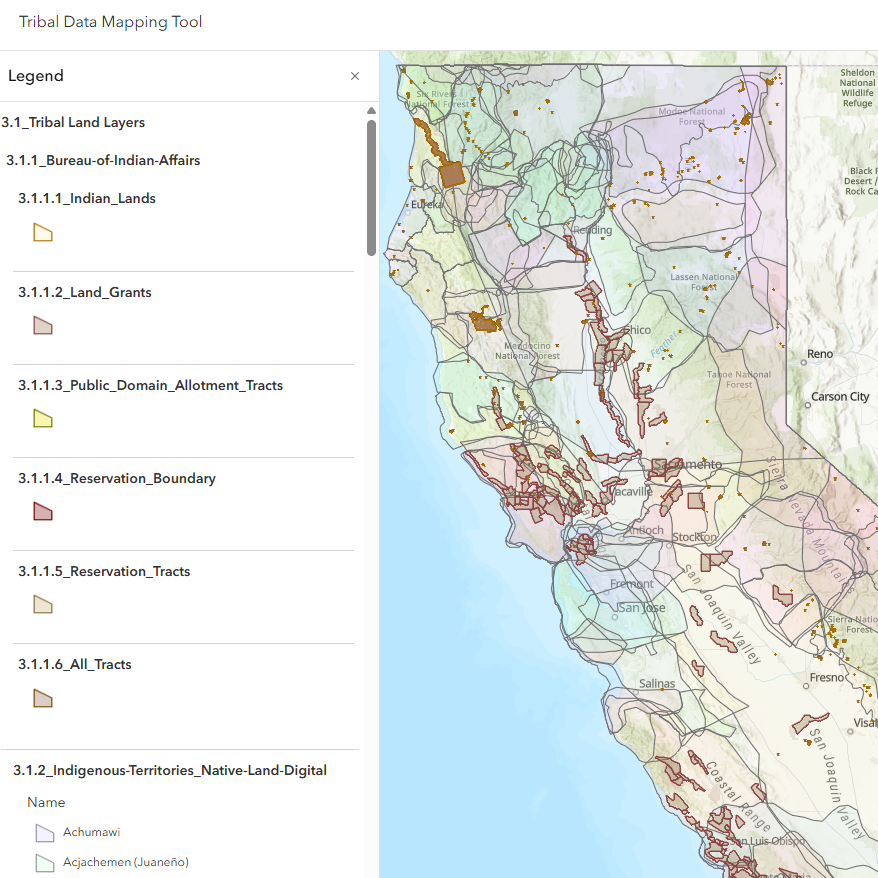
The Tribal Water Data map is a resource to learn about what existing beneficial uses are currently designated in the waterbodies where Tribal Beneficial Uses may be taking place. This map can support understanding of watersheds, water quality conditions, monitoring locations, and Tribal Beneficial Use considerations.
- Open the Tribal Data Map tool
- Select “Layers” on the lefthand side of the screen. Toggle the layers you want to see shown on the map by hovering over the layer with your mouse and clicking the visibility eye icon.
- Turn on the layer called “3.2_Integrated Report and Beneficial Uses Layers” This layer shows all of the beneficial uses that have already been formally designated in a water quality control plan (basin plan). This layer does not currently show designated Tribal Beneficial Uses because none have been designated yet. This layer includes beneficial uses like recreation, aquaculture, navigation, cold freshwater habitat, shellfish harvesting, etc.
Additional related mapping tools:
A Tribal Beneficial Use can only be designated with the Tribe’s consent and an official written request, which formally begins the process. General information is sufficient for a designation, and Tribes do not need to share exact locations or sensitive cultural details. Helpful information can include:
- Type of use (CUL and/or T-SUB)
- Specific types of activities (CUL only)
- Where the activity occurs (general segment or waterbody, not exact locations)
- Exposure pathways (ingestion, immersion, plant handling, etc.)
- Frequency, duration, and seasonality
- Whether the use is current or planned for the future
- Summary-level data on consumption or cultural practices
Information submitted along with a designation request letter may be shared in written, photographic, audio, or video form. Before submitting any information in writing, Tribes are strongly encouraged to meet with Water Boards staff to discuss what details will be shared publicly and ensure comfort with what will enter the public record.
Monitoring and Protecting Tribal Beneficial Uses
There are many opportunities for California Native American Tribes to engage in the process of data collection and monitoring to ensure water quality is protective to support Tribal Beneficial Uses.
The State Water Board and nine regional water boards are required to monitor and report on the status of the waters of California and to identify and report on impaired water bodies. Data collected by the Surface Water Ambient Monitoring Program (SWAMP) and its many collaborators provides information that can be used to identify if a water body is not meeting water quality objectives and may require that actions be taken to make the water cleaner.
The SWAMP Bioaccumulation Monitoring Program, in partnership with California Indian Environmental Alliance, offered a tribally-centered Bioaccumulation Monitoring Training Series in 2024. The purpose of this training series was to support California Native American Tribes in developing programs in the areas of bioaccumulation monitoring, data analysis, and data use processes, and enable Tribes and other bioaccumulation monitoring groups to adopt those processes into their workflows and more easily partner with the Program and the Safe to Eat Workgroup.
- Explore SWAMP data
- Safe to Swim data
- Safe To Eat Workgroup
- Surface Water Ambient Monitoring Program (SWAMP)
- California Environmental Data Exchange Network (CEDEN)
- California Water Quality Monitoring Council
- Safe and Affordable Funding for Equity and Resilience (SAFER) Program Data Dashboard
- Integrated Report Water Quality Assessment Information
- Harmful Algal Bloom Portal
- HAB Reports Map | Harmful Algal Blooms (HABs)
- Drinking Water Watch
- GeoTracker
- California Water Boards Open Data Portal
Additional Tribal Beneficial Uses Resources and Materials
Resolutions
- Resolution No. 2016-0011: Directing staff to develop proposed beneficial uses pertaining to Tribal traditional and cultural, Tribal subsistence fishing, and subsistence fishing.
- Resolution No. 2017-0027: Part 2 of the Water Quality Control plan for inland surface waters, enclosed bays, and estuaries of California-Tribal and subsistence fishing beneficial uses and mercury provisions
Inland Surface Waters, Enclosed Bays, and Estuaries (ISWEBE) Plan
Other Information
- California Tribes - Fish Use Final Report
- List of Current Beneficial Uses and Designation Status
- July 29, 2013 Letter to State Water Board requesting the creation of Tribal Beneficial Uses
- October 1, 2013, Letter from State Water Board to Tribal Ad Hoc Beneficial Use Group seeking feedback on proposed beneficial uses
- Historical Timeline of TBU Definition Development
Stay Informed
Email Subscription List
To receive updates on the Tribal Affairs program, subscribe to the Tribal Matters email list.
Check your email account for a confirmation email to complete your subscription.
Contact Us
Regional/Divisional Tribal Coordinators
Adriana Renteria, Tribal Liaison
Email: Tribal-Liaison@waterboards.ca.gov
Phone: (916) 341-5501

